


Surety Bond Insurance: 2026’s Crucial Protection
Understanding Surety Bond Insurance: A Financial Guarantee
A confident small business owner securing a new contract, thanks to being bonded.
Surety bond insurance is a three-party financial guarantee that ensures contractual obligations are met. Here’s a quick overview:
- What it is: A written agreement between a principal (your business), an obligee (your client), and a surety (an insurance company).
- Purpose: Guarantees performance, payment, or compliance with laws.
- Key difference from insurance: The principal must reimburse the surety for any paid claims. It’s a line of credit, not a risk transfer.
- Cost: Typically 1-15% of the bond amount annually, based on credit and risk.
- Who needs them: Contractors, licensed professionals, and businesses requiring permits.
Many Florida businesses, from construction contractors to licensed professionals, encounter surety bond requirements. While it has “insurance” in the name, a surety bond functions very differently. Unlike a policy that protects you from loss, a surety bond protects others (your clients, the government) from financial harm if you fail to meet your obligations. If a claim is paid, you must reimburse the surety company, making it more like a line of credit.
The US surety market is a multi-billion dollar industry, with construction representing a significant portion. Whether you’re a small business seeking a license bond or a contractor bidding on a project, understanding surety bonds is essential for legal operation and business growth.
As Niki Perez of PTL Insurance Associates, Inc., I’ve helped many Florida businesses steer surety bond requirements. My experience in helping Miami-area companies secure proper coverage provides deep insight into how these financial guarantees can support your business.
What is a Surety Bond and How Does It Work?
A surety bond insurance is a written agreement that guarantees compliance, payment, or performance of an act. It’s a three-party agreement that functions as a financial safety net. Unlike a typical insurance policy, a surety bond is underwritten with the expectation of zero losses, because the principal (the one who needs the bond) is ultimately responsible for any claims. The surety company acts as a guarantor, stepping in only if the principal fails to fulfill their obligation. These bonds are vital for ensuring fair dealings in sectors from government contracts to professional licensing. You can find a concise legal definition of a surety bond at Cornell Law School’s Wex.
The Three Parties in a Surety Agreement
Understanding the roles of each party is fundamental to grasping how a surety bond insurance works.
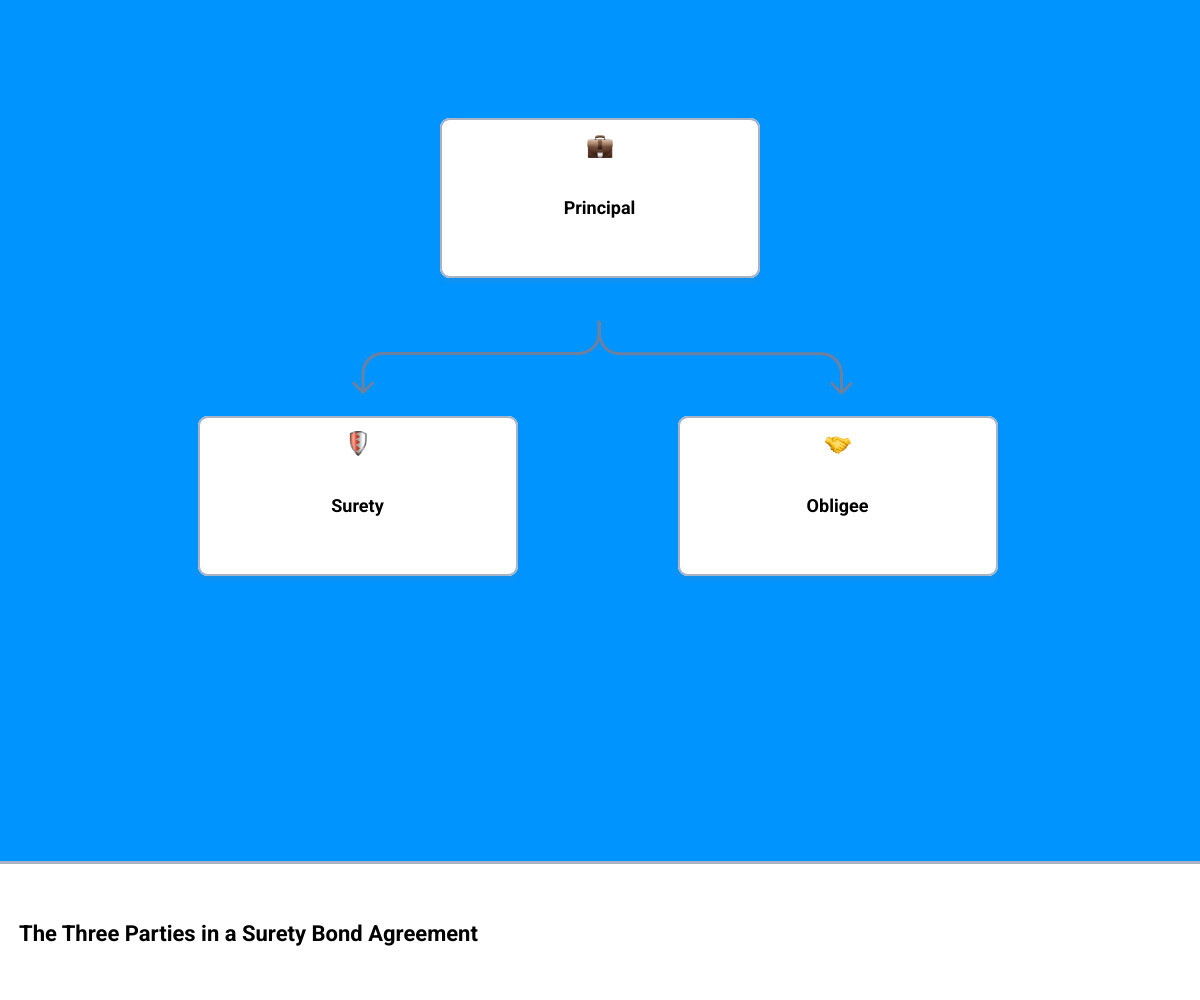
This infographic visually clarifies the roles and responsibilities of each party in a surety bond, helping readers understand the flow of obligations and guarantees.
- The Principal: The individual or business that needs the bond and is obligated to perform a specific duty. The Principal purchases the bond and signs an indemnity agreement, promising to reimburse the surety if a claim is paid.
- The Obligee: The party that requires the bond and is protected by it, such as a government agency, project owner, or client. The obligee is the beneficiary, receiving compensation if the principal defaults.
- The Surety: The insurance company that issues the bond and guarantees the principal’s performance to the obligee. If the principal fails, the surety steps in to ensure the obligation is met, up to the bond amount.
The key is the indemnity agreement: if the surety pays a claim, the principal must reimburse the surety in full, plus any expenses. This makes a surety bond more like a line of credit than traditional insurance.
Surety Bond vs. Traditional Insurance: The Key Difference
The distinction between surety bond insurance and traditional insurance is critical.
- Parties Involved: Traditional insurance is a two-party contract (insurer and insured). Surety bonds involve three parties (principal, obligee, surety).
- Risk: Traditional insurance transfers your risk to the insurer. A surety bond is a form of credit; the surety expects zero losses and the principal retains the ultimate financial risk.
- Premium Purpose: An insurance premium pools money for expected losses. A bond premium covers the surety’s underwriting and prequalification costs.
- Claim Process: With insurance, you file a claim for your own loss. With a bond, the obligee files a claim against the principal. The surety pays the obligee if the claim is valid, then seeks reimbursement from the principal.
This structure means the ultimate financial responsibility always lies with the principal. It’s a powerful tool for establishing credibility. For more on business protection, explore our business insurance services.
Main Categories and Examples of Surety Bonds
Surety bond insurance can be divided into two main categories: contract bonds and commercial bonds, each serving a distinct purpose.
The construction industry relies heavily on contract bonds to ensure projects are completed as promised. Commercial bonds are more often required for regulatory compliance and to protect the public.
Contract Surety Bonds
Primarily used in construction, contract bonds guarantee that contractors will fulfill their contractual terms. They are often required for public projects under laws like the Miller Act. For more details, see our insights on Surety Bonds for Construction.
Common types include:
- Bid Bonds: Guarantee the winning bidder will enter into the contract and provide the required performance and payment bonds.
- Performance Bonds: Guarantee the contractor will complete the project according to the contract’s terms.
- Payment Bonds: Guarantee the contractor will pay subcontractors, laborers, and suppliers.
- Maintenance Bonds: Guarantee against defects in materials or workmanship for a specified period after completion.
- Supply Bonds: Guarantee a supplier will deliver materials or equipment as specified.
Commercial Surety Bonds
This diverse group of bonds is often required by law to ensure regulatory compliance and protect consumers. They are crucial for many Florida businesses to obtain licenses or permits.
Common examples include:
- License and Permit Bonds: Required to obtain a license to operate in a specific industry (e.g., motor vehicle dealers, mortgage brokers). They guarantee compliance with industry laws.
- Court Bonds (Judicial & Fiduciary): Judicial bonds are required in legal proceedings (e.g., appeal bonds). Fiduciary bonds are for those managing others’ assets (e.g., executors, guardians), protecting against mismanagement.
- Public Official Bonds: Required for certain public officeholders (e.g., treasurers, notaries) to guarantee faithful performance of duties. Florida law requires a $7,500 bond for notaries public.
- Auto Dealer Bonds: A type of license bond required for motor vehicle dealers to protect consumers from fraud. California, for example, requires a motor vehicle dealer bond of $50,000.
- Notary Bonds: Protect the public from a notary’s errors or misconduct. Wisconsin requires a $500 notary bond.
These bonds are integral to maintaining trust in the business environment. Learn more on our Commercial Surety Bonds Information page.
The Underwriting Process for Surety Bond Insurance
The underwriting for surety bond insurance is rigorous because the surety’s goal is a 0% loss ratio. They bond only principals who are likely to fulfill their obligations and can reimburse the surety if a claim occurs. The process is a comprehensive evaluation of the principal’s financial strength, business acumen, and reputation, often called the “3 Cs”:
- Character: The principal’s reputation, integrity, and track record of fulfilling commitments.
- Capacity: The principal’s ability to perform the work, including their experience, equipment, and workforce.
- Capital: The principal’s financial strength, including their balance sheet, cash flow, and access to credit.
This prequalification signals to project owners that a contractor has been thoroughly vetted, and the surety often acts as a risk management partner.
How is the Cost of Surety Bond Insurance Determined?
The cost, or premium, is a percentage of the bond amount, typically ranging from 1% to 15%. For most businesses with good credit, the premium is between 1% and 3.5% annually.
Factors influencing the cost include:
- Bond Amount: A higher bond amount means a higher premium.
- Credit Score: A strong credit history is paramount and significantly lowers the premium rate.
- Industry Risk: Higher-risk industries like construction may face higher premiums (10% or more), while lower-risk businesses might pay as little as 1%.
- Type of Bond: Some bonds are inherently riskier and cost more.
- State Law: State laws can mandate bond amounts and influence costs. For example, Florida law requires a $7,500 notary bond, while Wisconsin requires a $500 bond, each with different set costs.
Risks and Considerations in a Surety Bond Insurance Agreement
It’s crucial for all parties to understand the risks.
For the Principal (Business Owner):
- Reimbursement Obligation: You must repay the surety for any paid claims, plus expenses. This is the most significant risk.
- Personal Indemnity: Owners of smaller businesses may have to personally guarantee the bond, putting personal assets at risk.
- Credit Impact: A claim can negatively affect your business and personal credit.
For the Surety (Guarantee Provider):
- Claim Investigation: The surety must invest resources to investigate any claim’s validity.
- Financial Loss Potential: If a principal defaults and cannot reimburse a paid claim, the surety suffers a financial loss.
- Contractual Disputes: Sureties can become entangled in complex disputes between the principal and obligee.
A bond agreement is a serious commitment built on financial strength and a clear understanding of responsibility.
Benefits and How to Obtain a Surety Bond
Surety bond insurance offers significant benefits for businesses, especially in competitive sectors like construction. Key advantages include:
- Project Completion Guarantee: The surety’s prequalification of contractors gives project owners assurance that the work will be completed as agreed.
- Taxpayer Protection: On public projects, the surety, not taxpayers, covers the cost if a contractor fails.
- Securing Contracts: Being bonded demonstrates credibility and financial stability, which is often a requirement for public and private contracts. This is vital for Getting Bonded and Insured for Small Business in Florida.
- Economic Growth: Bonds foster a reliable business environment, enabling growth and innovative project procurement.
The SBA’s Role for Small Businesses
The U.S. Small Business Administration (SBA) helps small businesses access surety bond insurance. The SBA Guarantee Program guarantees a portion of the bond to the surety company, reducing the surety’s risk and making them more willing to issue bonds to small businesses that might otherwise struggle to qualify. This provides increased bonding capacity, allowing small businesses to compete for larger contracts. For more on this, see our article on Florida Small Business Bonds.
Steps to Get a Surety Bond
Obtaining a surety bond insurance is straightforward with the right guidance. The most important step is to contact a professional insurance agent or broker, known as a surety bond producer.
- Identify Your Need: Know the type and amount of bond required by the obligee.
- Contact a Surety Bond Producer: Work with an experienced producer, like PTL Insurance Associates, Inc. The National Association of Surety Bond Producers is a good resource for finding qualified producers.
- Complete the Application: Fill out an application with business and personal information. Larger bonds may require financial statements.
- Underwriting Review: The surety company reviews your application and credit. This can be quick for simple bonds or take longer for complex contract bonds.
- Receive Your Quote: The surety provides a premium quote based on their review.
- Pay the Premium & Receive the Bond: Once you pay the premium, the bond is issued.
Working with a knowledgeable producer is key to an efficient process. Learn more about working with a Surety Bonding Company.
Surety Bonds vs. Other Financial Guarantees: What to Consider
When a financial guarantee is needed, surety bond insurance is often compared to instruments like letters of credit (LOCs) or cash deposits. They have distinct characteristics that make one preferable over another depending on the situation.
| Feature | Surety Bond | Letter of Credit (LOC) | Cash Deposit |
|---|---|---|---|
| Parties Involved | Three (Principal, Obligee, Surety) | Two/Three (Applicant, Bank, Beneficiary) | Two (Depositor, Beneficiary) |
| Cost | Annual premium (1-15% of bond amount) | Bank fees, collateral requirements | Funds tied up, opportunity cost |
| Effect on Credit | Generally unsecured, frees up credit lines | Ties up credit lines, requires collateral | Reduces liquidity |
| Claim Process | Surety investigates claim validity before paying | Bank pays on demand upon document presentation | Beneficiary draws directly from deposit |
| Flexibility | Conditional, allows for negotiation/mediation | “Pay on demand,” less flexible, immediate payment | Least flexible, immediate beneficiary access |
Liquidity Impact: A key advantage of a surety bond insurance over an LOC is its effect on a company’s liquidity. An LOC often requires you to tie up a portion of your credit line or provide cash collateral, reducing your borrowing capacity. A surety bond is typically unsecured and doesn’t impact your bank credit lines, freeing up capital for operations.
Conditional Payment: Surety bonds are conditional. If a claim is made, the surety investigates its validity before paying, allowing for dispute resolution. In contrast, LOCs are “pay on demand,” meaning the bank pays upon presentation of documents without investigating the underlying dispute.
By using surety bond insurance instead of LOCs, businesses can increase their available borrowing capacity, which is crucial for growth. We often advise our Miami and Florida clients on leveraging surety bonds to optimize their financial structure.
Frequently Asked Questions about Surety Bonds
Here are answers to some common questions about surety bond insurance.
What does it mean to be “bonded and insured”?
This phrase refers to two distinct types of protection:
- Bonded: This means you have a surety bond insurance in place. It protects your clients or the public by guaranteeing you will fulfill your contractual or legal obligations. If you fail, the bond covers their financial loss, and you must reimburse the surety.
- Insured: This means you have traditional liability insurance (e.g., general liability). This protects your business from financial losses due to accidents, property damage, or lawsuits.
Being bonded protects others, while being insured protects you. Many Florida businesses need both to build client confidence.
How long does it take to get a surety bond?
The timeline for obtaining a surety bond insurance varies:
- Simple Commercial Bonds: Standard license and permit bonds for applicants with good credit can often be approved the same day, with the bond issued the next day.
- Larger Contract Bonds: Bonds for large construction projects require a more rigorous underwriting process that can take several days to a few weeks.
It’s best to start the process as soon as you know a bond is required to avoid delays.
What happens if a claim is made on my bond?
If a claim is made against your surety bond insurance, the process is as follows:
- Claim Notification: The obligee informs the surety company of the principal’s failure to perform.
- Investigation: The surety investigates the claim’s validity.
- Resolution: If the claim is valid, the surety resolves it by paying the obligee or ensuring the work is completed.
- Reimbursement: The surety then seeks full reimbursement from the principal for all costs incurred, as per the indemnity agreement.
A claim on your bond is a serious matter with significant financial and reputational consequences.
Your Partner in Business Security
Surety bonds are a vital tool for guaranteeing performance, ensuring compliance, and fostering trust in business. From construction contractors to licensed professionals, they provide a layer of financial security that benefits all parties involved. Understanding the differences between bond types and how they compare to other financial instruments is the first step toward leveraging them for your company’s growth. For expert guidance on securing the right Surety Bonds and other essential coverages in Florida, the experienced brokers at PTL Insurance Associates, Inc. are here to help you steer your options. Contact us today to explore customized business insurance solutions.

