
Surety Bonding Company: Secure Your Success in 2025
Why Finding the Right Surety Bonding Company Matters
A surety bonding company is a specialized insurer that provides financial guarantees to ensure contractors and businesses fulfill their contractual or legal obligations. For businesses in competitive markets like Miami, having the right bond is often a prerequisite for success, as seen in busy construction sites across the city like the one pictured above.
If you’re searching for a surety bonding company, here are some key resources to get started:
Key Resources:
- U.S. Treasury’s List of Certified Companies – A list of federally authorized surety companies.
- SBA Surety Bond Partners – Government-backed options for small businesses.
For contractors and small business owners in Miami, securing the right surety bond can mean the difference between winning a lucrative contract and watching it go to a competitor. Whether you need a bond to bid on a construction project, obtain a business license, or fulfill a court requirement, the surety bonding company you choose will play a critical role in your success.
The surety industry protects over $11.5 trillion in contract and commercial surety exposure nationwide. These bonds act as a three-party guarantee: you (the principal) promise to fulfill an obligation to a project owner or agency (the obligee), and the surety company provides a financial backstop if you fail to deliver. Unlike traditional insurance, you’re expected to repay the surety for any claims paid on your behalf.
Choosing the right partner isn’t just about getting the lowest premium. It’s about finding a financially stable company with deep industry expertise, responsive underwriting, and a commitment to helping your business grow. The wrong choice can lead to delayed projects, higher costs, or even an inability to secure future bonds.
At PTL Insurance Associates, Inc., we’ve spent over 35 years helping Miami businesses steer complex insurance and bonding needs. We understand how critical it is to partner with a reliable surety bonding company. Our experience has guided countless contractors and business owners through the bonding process, ensuring they have the right coverage to compete and thrive.
What is a Surety Bond and Why is it Essential?
Think of a surety bond as a three-way promise that brings security to business deals. It’s not traditional insurance but a financial guarantee involving three parties:
- The Principal: You—the contractor or business owner who needs the bond and promises to fulfill an obligation.
- The Obligee: The entity requiring the bond, such as a government agency or project owner.
- The Surety: The surety bonding company that backs your promise with its financial strength.
This three-party relationship is the core of how a surety bond works, as the infographic below illustrates.
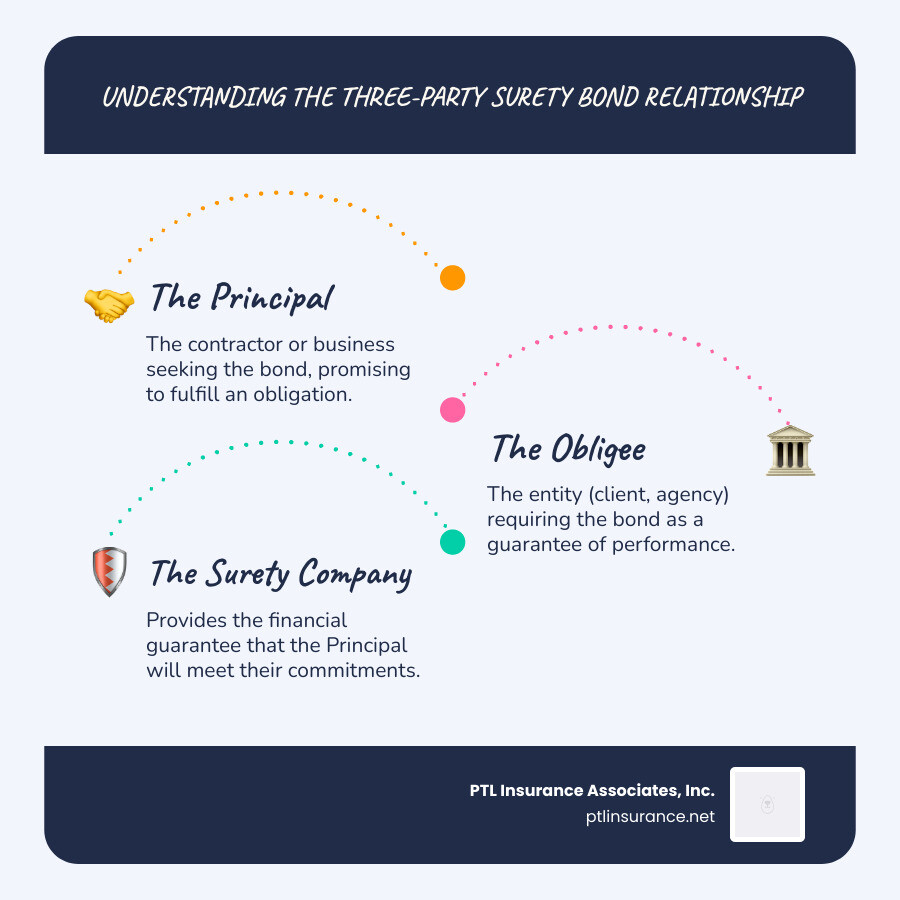
In practice, when you get a bond, the surety company vouches for you. If you fail to fulfill your obligation, the obligee can file a claim. If the claim is valid, the surety pays the obligee. However, unlike insurance, you are legally required to repay the surety for any claims paid. This makes a surety bond function more like a line of credit.
The Core Benefits for Your Business
For Miami contractors and business owners, surety bonds are powerful tools for business growth.
The most direct benefit is the financial guarantee. A bond assures project owners and clients that a financial safety net is in place, which is critical for large projects where millions of dollars are at stake.
Bonds also provide a significant credibility boost. When a respected surety bonding company issues you a bond, it signals to the market that they have vetted your finances and track record. This endorsement carries serious weight in competitive bidding situations and can be the deciding factor in winning a contract.
Additionally, bonds act as a prequalification tool, opening doors to larger opportunities. Many government contracts and major projects require bonding to even submit a bid. A bond demonstrates that you have the financial resources and experience to handle substantial work. According to the Economic Value of Surety Bonds report from the Surety & Fidelity Association of America, bonded construction projects consistently outperform non-bonded ones, protecting taxpayers and ensuring projects are completed.
Finally, many bonds are legally required. Florida requires specific bonds for public works projects, and many licensed professionals must be bonded to operate. Without these bonds, you cannot legally perform the work.
Understanding how bonding fits with your other insurance needs is essential for small businesses. We cover this in our guide on Getting Bonded and Insured for Small Business, showing how these elements build a strong foundation for growth.
A Guide to the Different Types of Surety Bonds
Not all surety bonds are the same; they are specialized tools designed for specific obligations. The bond you need depends on your industry and the promise you are making. For Miami businesses, from construction to legal services and licensed professions, understanding these distinctions is key to securing the right protection.
The surety bond landscape is divided into two main categories: contract bonds and commercial bonds.
Contract Bonds for Construction Projects
For contractors, these bonds are the foundation of construction projects, protecting project owners and ensuring workers and suppliers get paid.
- Bid Bond: Guarantees that if you win a bid, you will enter into the contract. It protects the project owner if you back out.
- Performance Bond: Guarantees that you will complete the project according to the contract’s terms. If you default, the surety steps in to ensure completion.
- Payment Bond: Guarantees that you will pay your subcontractors, laborers, and material suppliers, preventing liens on the property.
- Supply Bond: Guarantees that suppliers will deliver materials or equipment as promised.
These bonds work together to provide stability for construction projects. For more on how contractors can protect their business, see our guide on Contractors Insurance.
Commercial Bonds for Business Operations
Outside of construction, commercial bonds ensure businesses comply with laws, regulations, and professional standards.
- License and Permit Bonds: Required by Florida for many professions (e.g., auto dealers, mortgage brokers) to ensure you follow state regulations and protect consumers.
- Court and Fiduciary Bonds: Used in the legal system. Fiduciary bonds guarantee that someone managing another’s assets (like an estate executor) does so responsibly. Judicial bonds are used during court proceedings, such as an appeal bond to guarantee payment of a judgment.
- Janitorial Service Bonds: Protect your clients from theft by your employees. While often not required, they add a layer of credibility.
- Utility Bonds: Guarantee payment of your utility bills, often required for new businesses without a payment history.
Numerous other specialty bonds exist, such as environmental and reclamation bonds. As a general contractor, your needs may span both categories. Our resource on General Contractor Insurance explains how these bonds fit into a broader risk management strategy.
Understanding which bond you need is the first step. The next is finding a surety bonding company with the financial strength and expertise to support you.
How to Find the Right Surety Bonding Company
Choosing the right partner is critical. A strong surety bonding company is more than a provider; it’s a business advisor. Look for a company with a solid financial footing and a deep understanding of your industry, especially in a dynamic market like Miami where local expertise is a major asset.
Key Factors for Choosing a Surety Bonding Company
When selecting a surety, it’s important to do your research, comparing companies based on several key factors:
- Financial Strength: This is paramount. A surety’s ability to pay claims depends on its financial stability. Look for high ratings from agencies like A.M. Best. For federal contracts, the surety must be on the U.S. Department of the Treasury’s T-List, which certifies its financial standing. You can check the U.S. Treasury’s List of Certified Companies to verify a company’s status.
- Industry Experience: A surety that understands your specific field—whether it’s Miami high-rise construction or a local service business—can offer more flexible underwriting and better guidance.
- Customer Service: A responsive team is crucial. Slow application processing can cost you contracts. Look for a surety known for efficiency and support.
- Claims Handling Reputation: In the event of a claim, you need a partner with a fair and efficient process. Research how a company manages claims to protect your interests.
Understanding How a Surety Bonding Company Calculates Rates
The cost of a surety bond (the premium) is a percentage of the bond amount, based on the surety’s assessment of your risk. Lower risk means a lower premium. Key factors include:
- Credit Score: A strong personal and business credit history indicates financial responsibility.
- Financial History: For contract bonds, sureties review your financial statements, looking for profitability, strong working capital, and positive net worth.
- Business Experience: A proven track record of successful projects demonstrates your capability and reduces perceived risk.
- Bond Type and Amount: Higher bond amounts and riskier obligations result in higher premiums.
Most surety bonds also require a personal indemnity agreement, where you guarantee to reimburse the surety for any losses. Understanding these factors can help you strengthen your application and secure better rates. A surety bond is often part of a larger insurance strategy, which you can learn more about in our guide to Business Insurance for Contractors.
The SBA’s Role and Finding Certified Companies
For small businesses in Miami, the U.S. Small Business Administration (SBA) can be a powerful ally. Many small contractors lack the extensive financial track record that traditional surety bonding companies require. The SBA’s Surety Bond Guarantee Program helps bridge this gap.
The program provides a federal guarantee to surety companies for up to 90% of the bond amount. This reduces the surety’s risk, making them more willing to bond small businesses that might not otherwise qualify. For a Miami contractor looking to take on larger projects, this program can open doors to new opportunities, especially for businesses with limited working capital or those seeking federal contracts.
SBA Partnership Tiers Explained
The SBA establishes partnerships with specific sureties through two distinct models:
- Participating Prior Approval Companies: These sureties submit each bond application to the SBA for review before issuance. This model provides crucial support for newer businesses or those with less-established financials, as the SBA’s approval gives the surety confidence to issue the bond.
- Preferred Surety Bond Companies: These sureties have earned the authority to issue SBA-guaranteed bonds without prior SBA approval for each application. This results in a much faster turnaround, which is ideal for businesses that need a bond quickly and have reasonably strong financials.
An experienced broker can help you steer the List of SBA surety bond partners to find the right fit for your Miami business.
Where to Find a List of Certified Surety Companies
When bidding on a federal contract, your surety must be certified by the U.S. Department of the Treasury. This certification, known as being on the “T-List,” is non-negotiable for federal work.
The U.S. Treasury’s List of Certified Companies is the official resource for verifying a surety’s federal authorization. You can access the complete List of Certified Companies online. Each listing includes the company’s Underwriting Limitation—the maximum bond amount it can write for a single obligation.
Using a non-T-Listed surety for a federal project will likely lead to your bid being rejected. This certification ensures the surety meets strict financial standards. The Underwriting Limitation is especially important for large projects; you must ensure your chosen surety has enough capacity. Some of the largest sureties have Treasury listings in the billions, demonstrating their capacity for major federal projects.
At PTL Insurance Associates, we consult both the SBA partner list and the Treasury’s T-List to ensure our Miami clients partner with a financially sound, federally certified surety bonding company.
Conclusion: Secure Your Success with the Right Partner
The world of surety bonds can seem complex, but it’s a vital part of building a successful business. A surety bond is a powerful tool that boosts your credibility, helps you meet legal requirements, and opens the door to larger contracts in the competitive Miami market.
This guide has covered the essentials: from understanding the difference between contract and commercial bonds to vetting a surety bonding company for financial strength and industry expertise. We’ve also highlighted how resources like the SBA’s Guarantee Program and the U.S. Treasury’s certified list can help your business grow.
Finding the right partner is about more than just a premium; it’s about securing a relationship with a company that understands your needs and can support your goals. An experienced insurance broker is an invaluable guide in this process, helping you steer applications and find the best terms.
At PTL Insurance Associates, Inc., we have over 35 years of experience helping Miami businesses simplify these complexities. We take the time to understand your unique situation and guide you through every step, ensuring you have the right coverage to thrive. Your success is our success.
Ready to get started? Explore our dedicated pages to learn more about your bonding options. For English-language services, visit our Surety Bonds page. For our Spanish-speaking clients, we offer comprehensive information on Bonos de Garantía. Let’s work together to build the future of your business.