


Condo insurance coverage options: Secure Your Unit 2025
Why Your Condo Needs Its Own Insurance
Condo insurance coverage options protect what your association’s master policy doesn’t: your personal belongings, interior unit features, and liability risks. While your condo association has a master policy for the building’s exterior and common areas—like the structure pictured above—you need an individual HO-6 policy to cover everything inside your unit.
Essential condo insurance coverage options include:
- Dwelling Coverage: Interior walls, floors, cabinets, and fixtures
- Personal Property Coverage: Furniture, electronics, clothing, and valuables
- Personal Liability Coverage: Protection from lawsuits and guest injuries
- Loss Assessment Coverage: Your share of master policy shortfalls
- Additional Living Expenses: Temporary housing during repairs
Your association’s master policy acts as an umbrella for the building, while your HO-6 policy fills the gaps for your specific unit. Most mortgage lenders require condo insurance, and many associations now mandate it. Beyond these requirements, the right coverage protects your investment and provides peace of mind.
At PTL Insurance, we’ve helped countless condo owners understand their condo insurance coverage options and find policies that match their needs. Let us guide you through the essential choices every unit owner should consider.
The Two-Policy Puzzle: Your HO-6 Policy vs. The Association’s Master Policy
Condo ownership involves a shared insurance responsibility between you and your association. The association’s master policy is a protective umbrella over the entire building, while your individual HO-6 policy fills in the gaps for your personal space. Understanding what your association covers is the first step to knowing what condo insurance coverage options you need. Without this knowledge, you could be over-insured in some areas and dangerously under-protected in others. The infographic below illustrates this division of coverage.
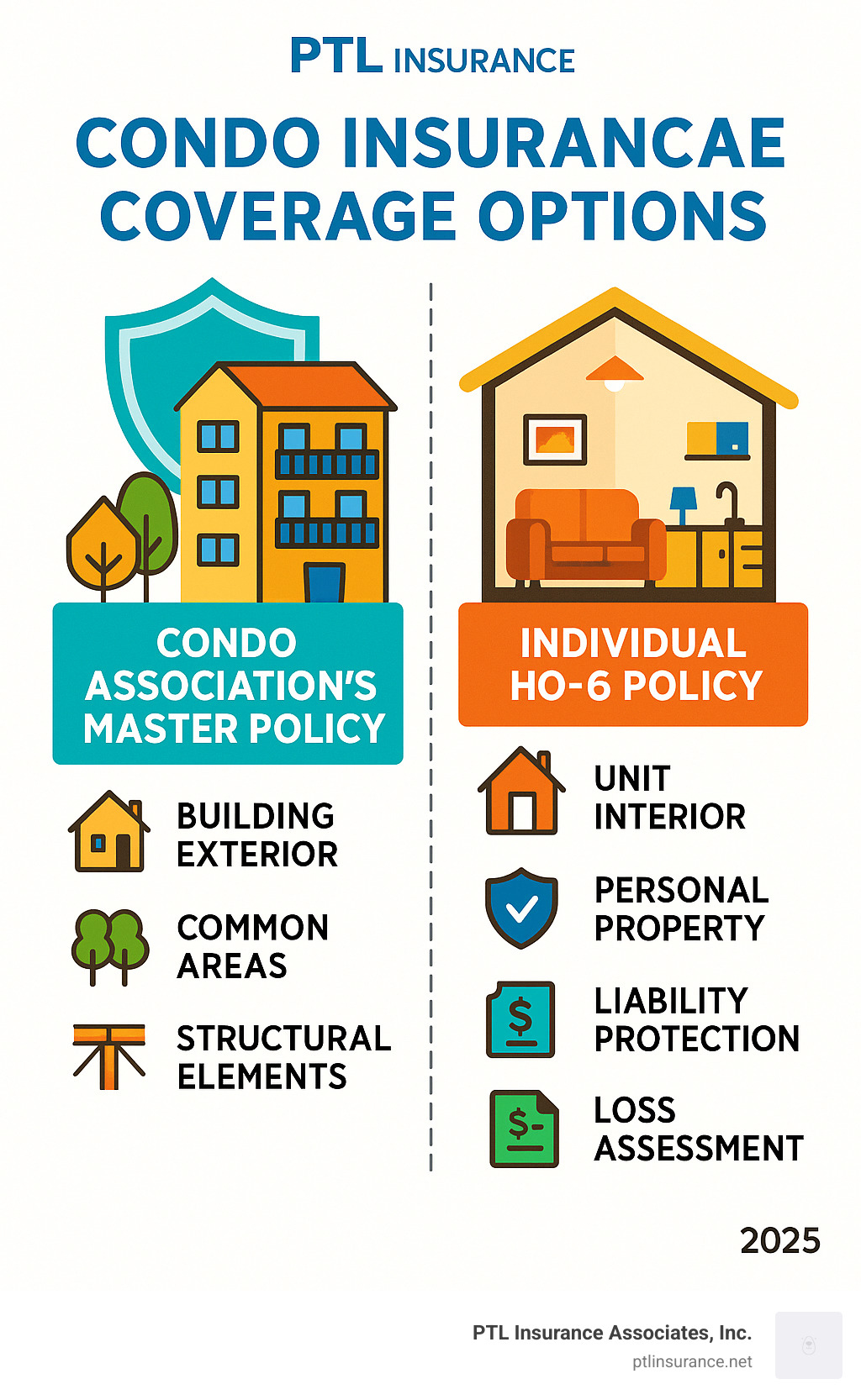
Understanding Your Association’s Master Policy
Your condo association’s master policy covers the common areas (hallways, elevators, roofs, pools), the building structure, and association liability for injuries in shared spaces. You contribute to this policy through your monthly fees. However, not all master policies are the same. There are three main types, and knowing which one your association has is critical.
Bare Walls-In: This basic policy covers only the building’s exterior and framing. It leaves you responsible for everything inside your unit, from flooring and cabinets to fixtures and paint.
Single Entity: This policy includes the building plus the original fixtures and finishes that came with your unit when it was built (e.g., standard appliances, basic flooring). Any upgrades you’ve made are typically not covered.
All-In (All-Inclusive): This is the most comprehensive policy, covering the building, original fixtures, and any improvements or upgrades made to individual units. It aims to restore your unit to its pre-damage condition.
The type of master policy dramatically affects your personal insurance needs. Review your association’s documents or speak with the management company to understand your coverage. For more details, see our guide on Condo Association Insurance.
The Role of Your Individual (HO-6) Policy
Your HO-6 policy provides personal protection, focusing on walls-in coverage for everything from the drywall inward. It protects your personal property (furniture, electronics, clothing) and provides crucial liability protection if someone is injured in your unit or you accidentally damage another’s property.
Most importantly, an HO-6 policy closes coverage gaps left by the master policy. If your association has a bare walls-in policy, your individual coverage must be robust enough to cover interior finishes. If they have an all-inclusive policy, you can focus more on personal property and liability. This customized approach is why every condo owner needs their own HO-6 Insurance policy, which is distinct from a traditional Homeowners Insurance Miami Condo policy for a single-family home.
Your Guide to Standard Condo Insurance Coverage Options (HO-6)
A standard HO6 Condo Insurance policy is your personal safety net, composed of several essential condo insurance coverage options. Understanding these components ensures you can recover financially after an unexpected event.
Dwelling / Building Property Coverage
Dwelling coverage protects the interior structures of your unit, from the “walls-in.” This includes your interior walls, flooring, cabinetry, countertops, fixtures (lighting, plumbing), and built-in appliances. It also covers betterments and improvements—the upgrades you’ve made to your unit, like new countertops or custom flooring. This protection is especially crucial if your association has a “bare walls-in” or “single entity” master policy, as those policies won’t cover your personal upgrades.

Personal Property Coverage
This coverage protects the belongings you own inside your unit, such as furniture, electronics, clothing, and jewelry, from perils like fire, theft, and certain types of water damage. You can choose between two settlement options:
- Actual Cash Value: Pays the depreciated value of your items.
- Replacement Cost: Pays to replace your items with new ones without deducting for depreciation. We typically recommend replacement cost coverage.
This protection often includes off-premises coverage, which can cover your belongings even when they are outside your condo, like a laptop stolen from your car.
Personal Liability and Medical Payments
If a guest is injured in your home or you accidentally damage a neighbor’s property, personal liability coverage can prevent a financial disaster. It covers legal fees, court costs, and damages if you’re found legally responsible. Most policies start at $100,000 in coverage, but higher limits are often recommended if you have significant assets.
Medical payments coverage helps pay for minor medical expenses for guests injured on your property, regardless of who is at fault. This can help resolve small incidents before they become large liability claims.
Loss Assessment Coverage
This coverage protects you from unexpected costs passed down from your condo association. It can help pay your share of the master policy deductible after a major claim or cover an association liability shortfall if a lawsuit judgment exceeds the master policy’s limits. These special assessments can be thousands of dollars. While standard policies may offer $1,000, comprehensive coverage can range from $5,000 to $50,000, providing crucial financial protection. This is a vital part of your Condo Insurance Coverage strategy.
Additional Living Expenses (ALE) / Loss of Use
If a covered event like a fire or burst pipe makes your condo uninhabitable, Additional Living Expenses (ALE) coverage helps pay for the increased costs of living elsewhere during repairs. This can include hotel bills, temporary housing, restaurant meals, and laundry services. The goal is to help you maintain your normal standard of living. If you rent out your condo, this coverage can also help replace lost rental income while the unit is being repaired.
Filling the Gaps: Optional Endorsements and Exclusions
Even a comprehensive HO-6 policy has its limits. Understanding what’s not covered and exploring optional endorsements helps you create personalized protection, which is especially important in areas like Miami with unique risks. These additional condo insurance coverage options fill gaps that matter to your situation.
Common Exclusions in a Standard Policy
Standard condo policies exclude certain events. Knowing these exclusions can prevent surprises later.
- Flood damage from storm surges or overflowing rivers is not covered and requires a separate policy, often through the National Flood Insurance Program.
- Earth movement events like earthquakes and sinkholes are also excluded.
- Intentional damage, pest infestations, and normal wear and tear are considered maintenance issues, not sudden and accidental events, and are therefore not covered.
If you’re concerned about flood risks, contact PTL Insurance Associates for flood insurance options to ensure complete protection.
Exploring Optional Condo Insurance Coverage Options
Endorsements are add-ons that customize your policy to address specific concerns. An independent broker can help you select the ones that fit your real-world risks.
| Endorsement | What It Covers | Who Needs It? |
|---|---|---|
| Water Backup | Damage from backed-up sewers or drains. | Owners in older buildings or low-lying areas. |
| Scheduled Personal Property | High-value items like jewelry, art, or collectibles beyond standard limits. | Anyone with valuable items. |
| Identity Theft Protection | Costs associated with restoring your identity after a breach. | Anyone concerned with cyber security. |
Smart Savings: How to Manage Your Condo Insurance Rates
The average cost of condo insurance is around $490 per year, but Florida rates can vary significantly. The good news is that by understanding what drives these costs, you can make smart choices to get excellent coverage at a fair price.
Factors That Influence Your Premium
Your Condo Insurance Rates are influenced by several key factors:
- Location: Proximity to the coast (hurricane risk), local crime rates, and distance to a fire station all impact your premium.
- Claims History: Your personal claims history and that of your building can affect rates. Frequent claims suggest higher risk.
- Coverage Limits: Higher coverage limits for dwelling, personal property, and liability will increase your premium.
- Deductible Amount: A higher deductible lowers your premium, but ensure you can afford the out-of-pocket cost if you file a claim.
- Building Construction: Newer buildings with modern safety features (sprinklers, storm-resistant windows) often qualify for lower rates.
- Safety Features: In-unit features like smoke detectors, burglar alarms, and fire extinguishers can earn you discounts.
Determining How Much Coverage You Need
- Personal Property: Create an inventory of your belongings to estimate their total value. Decide between actual cash value and replacement cost coverage; the latter is usually worth the small extra cost.
- Liability: Your coverage should reflect your total assets. While $100,000 is a common starting point, consider $300,000 to $500,000 or more if you have significant assets to protect.
- Dwelling: The amount you need depends entirely on your association’s master policy type. Our Home Insurance Calculator can help you estimate an appropriate amount.
Key Questions for Your Condo Association
Before buying a policy, get clear answers from your condo association.

- What is the master policy type? Is it bare walls-in, single entity, or all-in? This is the most important question.
- What is the master policy deductible? A high deductible could lead to a large special assessment for you.
- What is the association’s claims history? Frequent claims could indicate building issues and a higher likelihood of future assessments.
- Can a unit owner be held responsible for the entire master policy deductible? Some bylaws allow this if damage originates in one unit.
Getting written answers to these questions empowers you to choose the right condo insurance coverage options without gaps or overlaps.
Frequently Asked Questions about Condo Insurance
Is condo insurance required?
While Florida has no state law requiring it, your mortgage lender will almost certainly require an HO-6 policy to protect their investment. Additionally, many condo associations now mandate individual insurance in their bylaws to protect the community’s financial stability. Even if not required, having condo insurance coverage options is smart financial planning to protect you from liability claims, property loss, and special assessments.
What’s the difference between condo insurance (HO-6) and homeowners insurance (HO-3)?
The key difference is what you own and what’s covered. A homeowners (HO-3) policy covers an entire single-family home structure, inside and out. An HO-6 policy is designed for “walls-in” coverage. It protects your unit’s interior, personal belongings, and liability, working in tandem with the association’s master policy, which covers the building’s exterior and common areas. If you could shake your condo building, your HO-6 policy covers everything that would fall out of your unit.
Does condo insurance cover special assessments?
It depends on the reason for the assessment. Loss assessment coverage, a standard part of an HO-6 policy, does cover special assessments for covered perils, like damage from a hurricane or a liability lawsuit against the association. If repair costs or a legal settlement exceed the master policy’s limits, this coverage helps pay your share.
However, loss assessment coverage generally does not apply to assessments for routine maintenance or planned improvements, such as replacing an old roof or renovating the lobby. These are considered building upkeep, not unexpected losses.
Conclusion: Get a Policy Custom to Your Needs
Navigating Condo Insurance means understanding how your HO-6 policy and your association’s master policy fit together. The beauty of condo insurance coverage options is their flexibility. Your needs will depend on your association’s policy type, your personal property value, and your liability risks.
For residents in Miami and across Florida, these choices are critical due to hurricane risks and high property values. This is where working with an experienced independent broker makes all the difference. At PTL Insurance Associates, Inc., we’ve helped Florida condo owners make smart decisions for over 35 years. We analyze your association’s master policy to customize a plan that fills the gaps without making you pay for coverage you don’t need.
Cookie-cutter solutions rarely provide the best protection. Whether you’re a first-time buyer or a seasoned owner, we’re here to guide you to the right protection at the right price.
Ready to explore your condo insurance coverage options? Contact us to explore your condo insurance coverage options today and let’s build a policy that’s truly custom to your needs.

