


Miami Commercial Property Insurance: Finest 2025 Protection
Why Miami Commercial Property Insurance Demands Your Attention
Miami commercial property insurance is essential protection for business owners facing the city’s unique blend of hurricane threats, flood zones, and high-value assets. Understanding your coverage options—from basic building protection to business interruption and specialized endorsements—can mean the difference between a temporary setback and a business-ending financial loss.
Quick Overview: What You Need to Know
- Standard Coverage: Protects your building, equipment, inventory, and furniture against fire, theft, vandalism, and certain storms
- Miami-Specific Risks: Hurricanes, flooding, and windstorms require additional or separate coverage (flood insurance is almost always separate)
- Business Interruption: Covers lost income and ongoing expenses if your property becomes unusable due to a covered event
- Cost Factors: Location in flood/wind zones, building age and construction, security systems, and your business type all impact premiums
- Legal Requirements: Not mandated by Florida law, but typically required by lenders and landlords
Miami’s vibrant business scene creates tremendous opportunity, but also significant risk. Commercial properties here face unique threats, like the annual hurricane season, which brings catastrophic wind damage and flooding. The high value of Miami real estate means even moderate damage can result in massive losses. Florida’s weather is a fundamental business risk; a single storm can shut down operations for months, destroying inventory and revenue. Without the right insurance, these events can permanently close a business, especially when owners find too late that their standard policy excludes flood damage or has insufficient coverage limits.
I’m Niki Perez, and after a successful career in Real Estate Management Services, I now work alongside my husband at PTL Insurance Associates, Inc., where we specialize in helping Miami businesses steer the complexities of miami commercial property insurance. With our deep understanding of South Florida’s unique risk landscape and nearly two decades of local market experience, we’ve guided countless business owners through the process of building comprehensive protection strategies that truly work when disaster strikes.
Understanding the Core of Commercial Property Insurance
For businesses in Miami, understanding the bedrock of commercial property insurance is not just good practice—it’s paramount to survival and sustained growth. This foundational knowledge empowers you to make informed decisions, ensuring your investment is shielded against the unpredictable.
What is Commercial Property Insurance and Why is it Essential in Miami?
Commercial property insurance is a financial safety net that helps businesses recover the cost of damaged, lost, or destroyed tangible assets—such as buildings, equipment, and inventory—due to perils like fire, windstorm, and theft. In Miami, this coverage is crucial. The city’s high-value properties and constant threat from hurricanes and floods mean a single event can cause devastating financial loss. Adequate insurance ensures business continuity and provides the resources to rebuild. While not legally required by the state, lenders and landlords almost always mandate commercial property insurance to protect their investments, making it a practical necessity for nearly every business.
What Properties and Assets Are Covered?
A comprehensive miami commercial property insurance policy covers a wide array of assets crucial to your business, which can be customized to include:
- Buildings and Structures: The physical building your business owns or rents, including its foundation, walls, roof, and permanently installed fixtures.
- Business Personal Property (BPP): Everything inside your building that isn’t part of the structure itself, such as:
- Inventory and Stock: Goods you sell or materials you use.
- Furniture and Fixtures: Desks, chairs, shelving, and display cases.
- Machinery and Equipment: Computers, specialized tools, and operational machinery.
- Signage and Fencing: Exterior signs and fences on your business premises.
- Property of Others in Your Care: If your business holds property belonging to others (e.g., a repair shop), your policy can cover damage to these items.
Coverage can also extend to lost income (business interruption) and valuable papers, ensuring every tangible asset is accounted for.
Who Needs Miami Commercial Property Insurance?
If your Miami business relies on a physical location or tangible assets, you need miami commercial property insurance. It’s a vital tool for businesses of all sizes and types, not just large corporations.
Examples of who benefits include:
- Small Business Owners: From local boutiques to tech startups, if you have an office, storefront, or equipment, your assets are at risk.
- Real Estate Investors & Landlords: Protecting investment properties, from single units to multi-tenant buildings, is non-negotiable.
- Retail Stores: Fire, theft, or hurricane damage can devastate your inventory and revenue.
- Office Buildings: Equipment, furniture, documents, and the building itself need protection.
- Industrial and Warehouse Spaces: Large machinery, inventory, and vast structures require robust coverage.
- Restaurants and Hospitality: Kitchen equipment, furnishings, and perishable goods are critical assets that need safeguarding.
Essentially, if property damage from storms, fire, or theft would cause heavy financial loss, this insurance is indispensable.
Decoding Your Policy: Coverage Forms and Valuation
Navigating commercial property insurance can sometimes feel like deciphering a complex code. Yet, understanding the different coverage forms and valuation methods is crucial, as these details determine the strength and scope of your protection when you need it most.
Basic, Broad, and Special Coverage Forms
Commercial property policies typically come in three main forms, each offering increasing levels of protection. The key distinction often lies between “named perils” and “all-risk” (or “special form”) coverage.
- Basic Form: This is the most limited type of coverage, protecting against a specific list of “named perils.” These typically include common events like fire, lightning, explosion, windstorm, hail, smoke, aircraft or vehicle collision, riot or civil commotion, vandalism, sprinkler leakage, and sinkhole collapse. If a peril isn’t explicitly named, it’s not covered.
- Broad Form: Building upon the Basic Form, the Broad Form adds several more named perils to the list. These often include falling objects, weight of snow, ice, or sleet, and water damage from accidental discharge or overflow of plumbing. It offers a wider safety net but is still restricted to the perils specifically listed.
- Special Form: This is the most comprehensive coverage available and is often referred to as “all-risk” coverage. Instead of listing what is covered, the Special Form covers all perils unless they are specifically excluded in the policy. This means if a cause of loss isn’t on the exclusion list (which typically includes flood, earthquake, war, nuclear hazard, and sometimes mold or mechanical breakdown), it’s covered. For Miami businesses, with our unique exposure to a wide array of potential disasters, a Special Form policy is generally the most advisable choice, as it provides the broadest protection.
For a deeper dive into the specifics of these forms and other aspects of commercial property insurance, you can refer to the comprehensive Commercial Property Insurance Overview provided by the Florida Department of Financial Services.
Replacement Cost (RC) vs. Actual Cash Value (ACV)
When your property is damaged, how much will your insurance pay out? This depends heavily on whether your policy uses Replacement Cost (RC) or Actual Cash Value (ACV) valuation. This is a critical distinction, especially in a market like Miami where reconstruction costs can be high.
- Replacement Cost (RC): This coverage pays the current cost to rebuild or replace your damaged property with new materials of similar kind and quality, without any deduction for depreciation. This means if your 10-year-old roof is destroyed by a hurricane, an RC policy will pay to install a brand-new roof, allowing you to restore your property to its pre-loss condition without having to dip into your own pocket for the depreciated value.
- Actual Cash Value (ACV): In contrast, ACV coverage pays the replacement cost of the damaged property minus depreciation. Using the same roof example, an ACV policy would pay for a new roof, but then deduct an amount for the 10 years of wear and tear the old roof had accumulated. This means you would receive a smaller payout and would be responsible for covering the difference to replace the roof fully.
For a Miami commercial property insurance policy, we almost always recommend Replacement Cost coverage. Given the high cost of construction in South Florida, RC provides a much stronger financial recovery, allowing you to return your business to full operation without having to compromise on rebuilding.
How Coinsurance Can Impact Your Claim
The coinsurance clause is one of the most misunderstood—and potentially costly—elements of a commercial property insurance policy. It’s a provision that encourages businesses to insure their property for a specific percentage of its value, typically 80%, 90%, or 100%. If you fail to meet this requirement, you could face a significant financial penalty at the time of a claim, even if your loss is less than your policy limit.
Here’s how it works: Let’s say your commercial building in Miami has a Replacement Value of $1,000,000, and your policy has an 80% coinsurance clause. This means you’re required to carry at least $800,000 in coverage ($1,000,000 x 80%).
Scenario 1: Adequately Insured
- You carry $800,000 in coverage.
- You suffer a $200,000 loss.
- Your policy pays $200,000 (minus your deductible). You’re golden!
Scenario 2: Underinsured (Coinsurance Penalty)
- You only carry $400,000 in coverage (you’re underinsured by $400,000 compared to the $800,000 requirement).
- You suffer a $200,000 loss.
- The formula applied is: (Amount of Insurance Carried / Amount of Insurance Required) x Amount of Loss.
- ($400,000 / $800,000) x $200,000 = $100,000.
- In this case, the policy would only pay $100,000 (minus your deductible), leaving you to pay the remaining $100,000 of the loss out of pocket. Ouch!
This “underinsurance penalty” highlights why accurate property valuation is critical. We work with our clients to ensure their coverage limits reflect the true replacement cost of their property, helping them avoid costly surprises when a claim is filed.
Tailoring Your Shield: Essential Endorsements for Miami Businesses
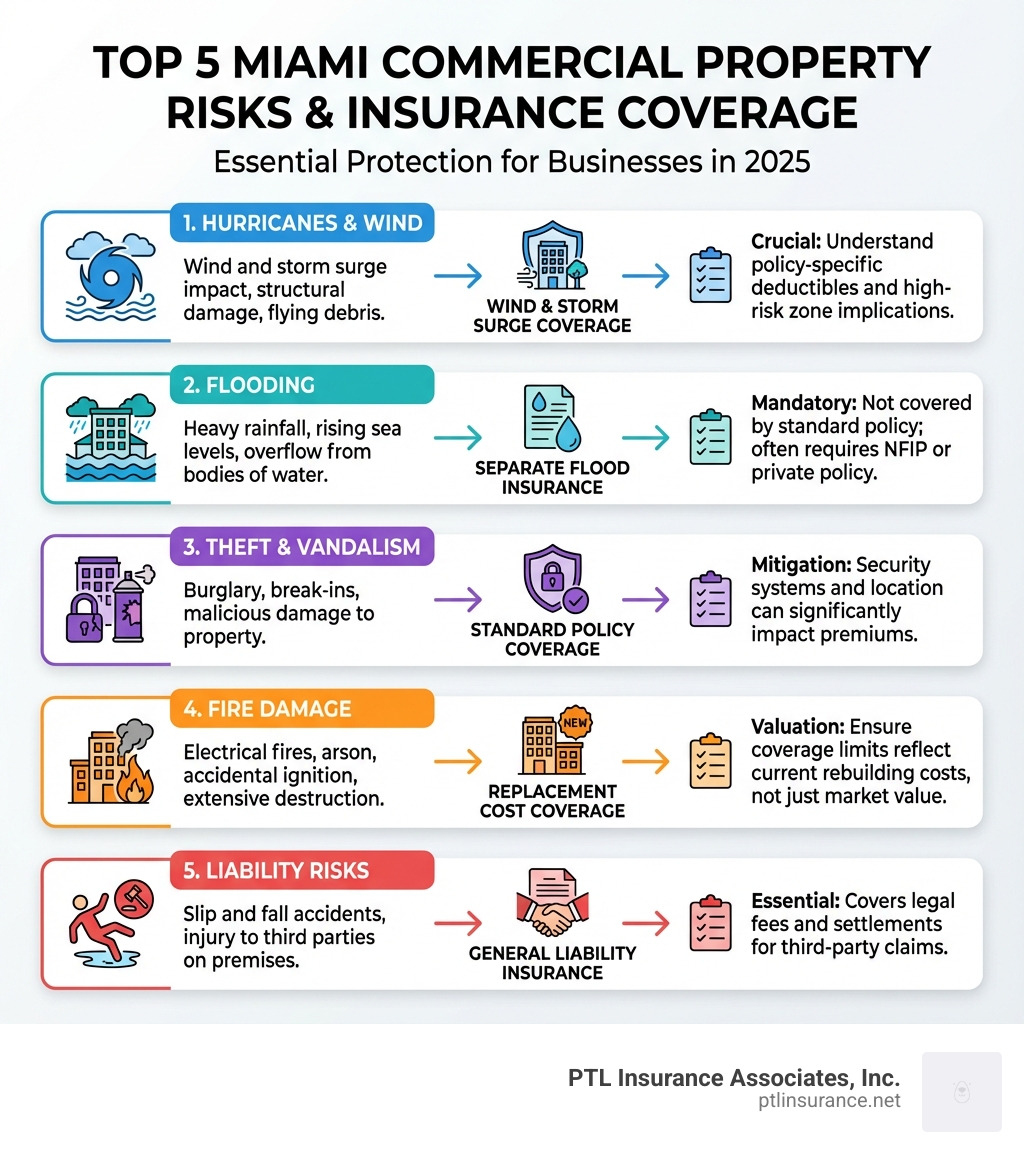
Standard commercial property policies are a great starting point, but they rarely provide comprehensive protection against all the unique risks that Miami businesses face. That’s where endorsements come in—they’re crucial add-ons that allow us to tailor your policy, closing gaps and building a truly robust shield for your enterprise. The infographic below visualizes the primary threats Miami businesses must prepare for and the corresponding insurance solutions needed to mitigate them.
Business Interruption and Extra Expense Coverage
Physical damage to your property is only half the battle after a disaster. Business Interruption and Extra Expense coverage are lifesavers that address lost income during repairs and extra costs incurred to keep operations running.
- Business Income (Business Interruption) Insurance: This crucial coverage replaces lost income and covers ongoing operating expenses (like rent, payroll, and utilities) if your business is forced to close temporarily due to a covered event, such as fire or hurricane damage. It helps bridge the financial gap, allowing you to pay employees, suppliers, and landlords even when your doors are shut. For Miami businesses, this is particularly vital for post-hurricane recovery, ensuring that a temporary shutdown doesn’t become a permanent one.
- Extra Expense Coverage: This covers the additional expenses you incur to continue your normal operations after a covered loss. This could include the cost of temporary relocation, leasing additional equipment, or paying overtime to employees to catch up on production. It’s about minimizing the disruption and getting your business back on its feet as quickly as possible.
These coverages are highly recommended for any business that relies on a physical location for operations, ensuring you can survive the aftermath of a significant event.
Specialized Add-Ons for Unique Miami Risks
Miami’s unique environment demands specialized insurance solutions. Here are some key add-ons we often recommend to our clients:
- Flood Insurance: This is perhaps the most critical endorsement for any Miami business. Standard commercial property insurance policies typically exclude flood damage. This means damage from storm surge, rising rivers, or heavy rainfall that causes water to enter your building from the ground up is not covered by your basic policy. Given Miami’s low elevation and susceptibility to tropical storms and hurricanes, a separate flood insurance policy, often through the National Flood Insurance Program (NFIP) or a private insurer, is an absolute must. Don’t learn this lesson the hard way!
- Hurricane and Windstorm Deductibles: In Florida, policies often include a separate, higher deductible specifically for hurricane and windstorm damage. These are usually expressed as a percentage (e.g., 2% or 5%) of your property’s insured value, rather than a flat dollar amount. We help you understand how these deductibles work and plan for their impact.
- Ordinance or Law Coverage: After a major event, local building codes might have changed. This endorsement covers the additional costs associated with rebuilding or repairing your property to meet current local building codes, even if the damage itself didn’t require these upgrades. Without it, you could be left footing the bill for mandatory improvements.
- Fire Liability for Renters: If you rent your commercial space, this coverage protects you if you are held legally responsible for fire damage to the leased building due to your negligence. It’s a smart addition for any tenant.
- Spoilage Coverage for Restaurants: For our many fantastic restaurants and food service businesses in Miami, spoilage coverage is a must. This covers the loss of perishable inventory due to events like power outages, mechanical breakdown of refrigeration units, or contamination, ensuring your delicious ingredients don’t become a total write-off.
By carefully selecting these and other specialized endorsements, we can craft a miami commercial property insurance policy that truly protects your business from the specific threats it faces.
The Cost and Complexity of Miami Commercial Property Insurance
The cost of your miami commercial property insurance is a carefully calculated sum based on a unique blend of factors, especially in a high-risk area like South Florida. Understanding these elements can help you anticipate premiums and identify opportunities for savings.
Key Factors Determining Your Insurance Premiums
Several key variables influence the cost of your commercial property insurance in Miami:
- Location, Location, Location (and Risk): This is paramount in Miami. Properties located in flood-prone areas or high-wind zones will naturally face higher premiums due to increased risk. A building along the coastline, for instance, will cost more to insure for windstorm than one inland.
- Building Construction and Age: The type of materials used and the age of your building play a significant role. A masonry noncombustible building, for example, might be cheaper to insure than a wood frame building, as it’s less susceptible to fire damage. Newer buildings built to modern hurricane codes may also qualify for better rates.
- Occupancy and Business Type: The nature of your business directly impacts risk. A building used for manufacturing fireworks would understandably cost more to insure than one storing nonperishable food. Retail, office, restaurant, warehouse—each carries its own set of risk factors.
- Fire and Security Systems: Proactive safety measures can lead to discounts. Businesses with advanced fire alarms, sprinkler systems, security systems, and surveillance cameras are generally considered lower risk and may qualify for reduced premiums.
- Claims History: A history of frequent or large claims can signal higher risk to insurers, potentially leading to increased premiums.
- Coverage Limits and Deductibles: The higher your coverage limits and the more comprehensive your policy (e.g., Special Form vs. Basic Form), the higher your premium will be. Conversely, opting for a higher deductible can lower your premium, but means you’ll pay more out-of-pocket for a claim.
When considering a policy, it’s always wise to Verify before you buy! an agent’s license and the insurance company’s status. We only work with reputable, licensed providers to ensure you receive reliable coverage.
Risk Management: Proactive Steps to Lower Costs
While some factors like location are fixed, proactive risk management can lower your miami commercial property insurance premiums and reduce your overall risk of loss:
- Installing Hurricane Shutters and Impact-Resistant Windows: These measures significantly reduce wind damage risk during tropical storms and hurricanes, often leading to premium credits.
- Upgrading Electrical and Plumbing Systems: Modernizing these critical systems can prevent issues like electrical fires or water damage from leaks, which are common claims.
- Regular Building Maintenance: Keeping your roof in good repair, maintaining your HVAC systems, and ensuring proper drainage around your property can prevent minor issues from escalating into major claims.
- Implementing Robust Security Systems: Beyond alarms, consider surveillance cameras, access control systems, and adequate lighting to deter theft and vandalism.
- Employee Safety Protocols: Training employees on safety procedures, fire drills, and proper equipment use can minimize workplace injuries and property damage, contributing to a better claims history.
- Working with an Independent Agent: We, as independent brokers, have access to multiple insurance providers. This allows us to shop around and find the most competitive rates for the coverage you need, often identifying discounts you might not find otherwise. Our goal is to design a package to fit your specific risks and get your business up and running if disaster strikes.
By combining smart insurance choices with diligent risk management, you can protect your assets effectively while also managing your insurance costs.
The Policy Lifecycle: From Application to Claim
Understanding your miami commercial property insurance policy isn’t just about what’s covered; it’s also about knowing how to manage it throughout its lifecycle—from assessing your initial needs to navigating the claims process.
Assessing Needs and Reviewing Your Policy
Your business is dynamic, and your insurance policy should be too. Coverage that was adequate last year might fall short today.
- Initial Risk Assessment: Before even purchasing a policy, we conduct a thorough assessment of your business’s unique risks, property values, and operational specifics. This helps us determine the appropriate coverage limits, deductibles, and necessary endorsements.
- How Often to Review Your Policy: We recommend reviewing your commercial property insurance policy at least annually. This ensures that your coverage remains aligned with your current business operations and asset values.
- When to Update Coverage: Don’t wait for your annual review if significant changes occur. You should update your policy whenever:
- You purchase new equipment or machinery.
- You expand your operations or renovate your property.
- Your inventory values significantly increase or decrease.
- You acquire new locations or sell existing ones.
- There are changes in local building codes or construction costs.
Regularly updating your policy prevents costly surprises, like coinsurance penalties, and ensures your financial protection keeps pace with your business’s growth.
Filing a Commercial Property Claim in Miami
Filing a claim is often stressful, but knowing the process can help.
- Immediate Steps After a Loss:
- Ensure Safety: Prioritize the safety of your employees and customers.
- Prevent Further Damage: Take reasonable steps to mitigate additional damage (e.g., covering a broken window, turning off utilities).
- Document Everything: Take photos and videos of the damage before any cleanup or repairs begin. Create a detailed inventory of damaged or lost items.
- Secure the Property: Protect your property from theft or further damage (e.g., board up windows, secure entry points).
- Contacting Your Agent Promptly: As soon as it’s safe to do so, notify us. We’re here to guide you through the entire claims process, helping you understand your policy and what information the insurer will need.
- The Claims Adjustment Process: An insurance adjuster will inspect the damage, review your documentation, and assess the extent of the loss. They will then determine the payout based on your policy’s terms, coverage limits, and deductibles. We act as your advocate throughout this process, ensuring your claim is handled fairly and efficiently.
The goal of miami commercial property insurance is to help you recover quickly, minimizing the disruption to your business.
Frequently Asked Questions about Miami Commercial Property Insurance
We often encounter similar questions from Miami business owners. Here are some of the most common, answered directly:
Does a standard policy cover hurricane and flood damage?
This is a critical question for any Miami business. Standard commercial property insurance policies typically cover wind damage from hurricanes, though they often include a separate, higher deductible specifically for windstorm events (sometimes expressed as a percentage of your insured value). However, standard policies almost universally exclude flood damage. Because Miami is at high risk for hurricanes and flooding, business owners should strongly consider purchasing separate flood insurance to fully protect their property. Flood coverage is available through the National Flood Insurance Program (NFIP) or private insurers and covers damage from storm surge or rising water that enters your property from the ground up.
What is the difference between Replacement Cost and Actual Cash Value?
The difference between Replacement Cost (RC) and Actual Cash Value (ACV) is depreciation. Replacement Cost (RC) coverage pays to replace your damaged property with new materials of similar kind and quality, without deducting for depreciation due to age or wear and tear. This means you receive the full cost to replace an item. Actual Cash Value (ACV) coverage, on the other hand, pays the replacement cost minus depreciation. With ACV, the payout will be lower for older property, meaning you would have to cover the difference out-of-pocket to replace the item with a new one. For Miami businesses, given high rebuilding costs, RC is generally the preferred and more protective option.
Is commercial property insurance legally required in Miami?
While commercial property insurance is not legally mandated by the state of Florida for all businesses, it is almost always required by lenders if you have a mortgage on your commercial building. This protects their financial interest in your property. Additionally, most commercial lease agreements will require tenants to carry their own property and liability insurance. Even if not mandatory for your specific situation, having this insurance is strongly recommended to protect your business assets, ensure continuity, and safeguard your investment from Miami’s unique risk landscape.
Secure Your Miami Business with an Expert Partner
Protecting your commercial property in Miami is a complex but critical task. The city’s unique environmental and economic landscape demands more than a one-size-fits-all policy; it requires a custom strategy built on local expertise. By understanding coverage forms, valuing your property correctly, and adding crucial endorsements for risks like floods and business interruption, you can build a resilient financial shield. Working with a knowledgeable partner is key to navigating this market. We at PTL Insurance Associates, Inc. have over 35 years of experience helping Miami businesses secure the right protection. For a comprehensive review of your needs and a customized plan, explore our commercial property insurance services.

