


Floods: 2025’s Dire Risks Explained
Why Understanding Floods is Critical for Florida Residents
Floods are an overflow of water that submerges land that is usually dry, and they represent one of the most common and costly natural disasters affecting communities worldwide. As the image above illustrates, when heavy rainfall, storm surge, or other factors cause water levels to exceed normal boundaries, the results can be devastating for homes, businesses, and entire communities.
Key Facts About Floods:
- Most common disaster: Floods are the most widespread weather-related natural disaster globally
- Deadliest in the US: Floods kill more people annually than tornadoes, hurricanes, or lightning combined
- Costly impact: Approximately 75% of all presidentially declared natural disasters in the US involve flooding
- Growing threat: Climate change is increasing both the frequency and severity of flood events
Floods can occur anywhere and anytime – from sudden flash floods in urban areas to slow-rising river floods that last for weeks. They’re caused by heavy rainfall, storm surge, snowmelt, dam failures, or overwhelmed drainage systems. The risk is particularly high in Florida, where hurricanes, tropical storms, and intense rainfall events are common.
What makes floods especially dangerous is their unpredictability and speed. As little as 6 inches of moving water can knock a person down, while 2 feet can sweep away a vehicle. The economic impact is staggering – floods cause over $7 billion in damage annually in the United States alone.
I’m Niki Perez from PTL Insurance Associates, Inc., and through years of helping Miami residents steer insurance claims after major floods and storms, I’ve seen how devastating these events can be for families and businesses. My goal is to help you understand flood risks and prepare accordingly, so you can protect what matters most.
Understanding the Different Types of Floods
Picture this: you’re watching the weather forecast, and they mention floods in your area. But what kind of flooding are we talking about? The truth is, not all floods are created equal, and understanding the differences could literally save your life and property.
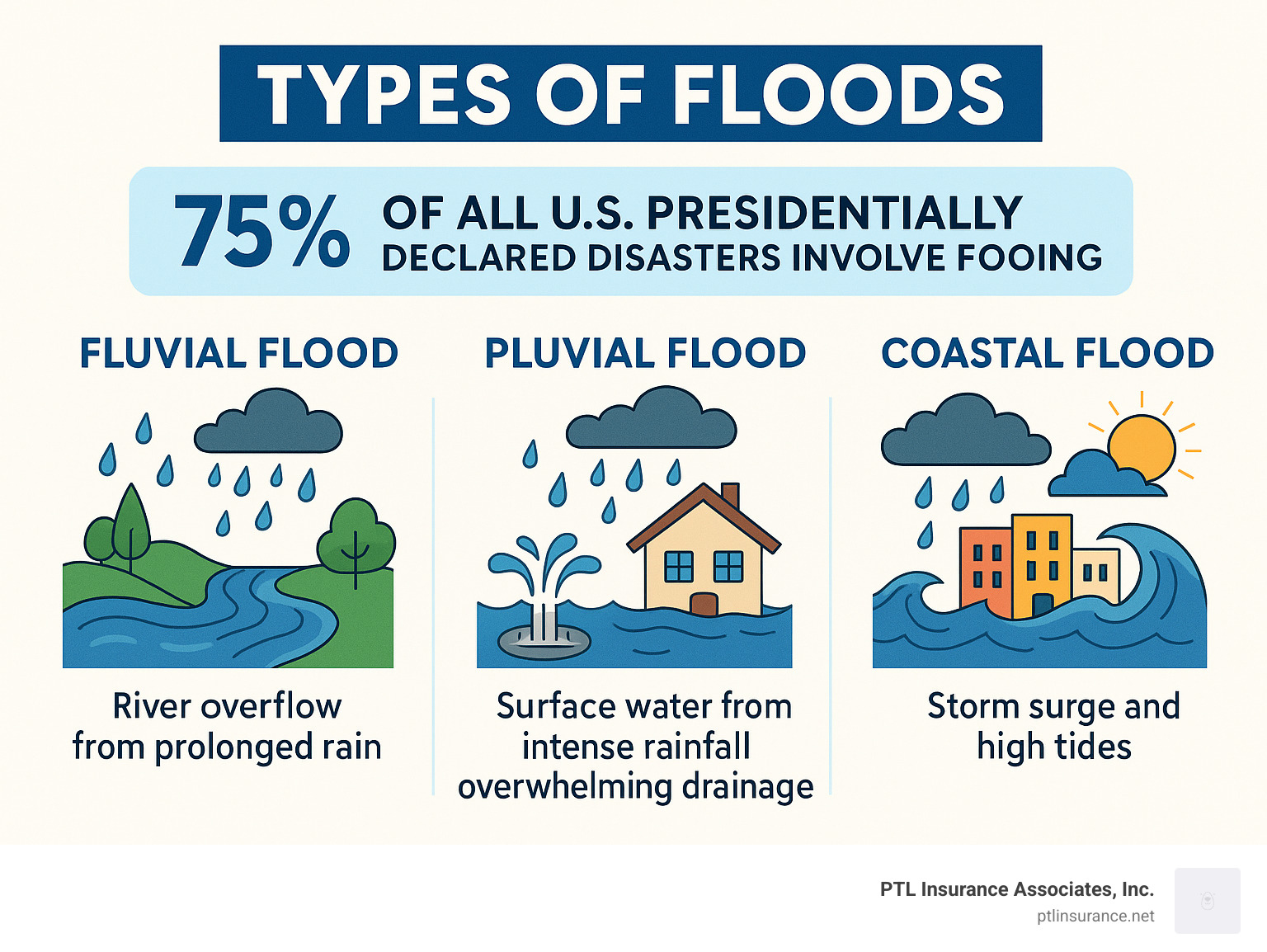
After three decades of helping Miami families steer flood damage claims, I’ve seen how each type of flood brings its own unique challenges. Let me walk you through the main types you need to know about. The infographic below breaks down the most common types and a key statistic about their impact.
What are Fluvial and Pluvial Floods?
Fluvial floods are what most people picture when they think of traditional flooding. These happen when rivers and streams simply can’t handle all the water coming their way. Think of it like a bathtub overflowing – when prolonged rainfall or rapid snowmelt sends more water downstream than the riverbanks can contain, the excess spills onto surrounding land.
What makes fluvial flooding particularly challenging is its staying power. These floods can last for days, weeks, or even months in large river systems. The water moves relatively slowly but covers vast areas, giving communities time to evacuate but causing extensive long-term damage to homes and businesses.
Pluvial floods are the sneaky ones that catch people off guard. These surface water floods happen when intense rainfall overwhelms the ground’s ability to absorb water, even in areas far from rivers or coasts. The water has nowhere to go, so it pools on streets, in parking lots, and around buildings.
Here’s what makes pluvial flooding so tricky: it can happen anywhere. Your neighborhood might be nowhere near a river, but if the storm drains get overwhelmed by a sudden downpour, you’re still at risk. Urban areas with lots of pavement and concrete are especially vulnerable because water can’t soak into the ground naturally.
Here’s a startling fact: more than 50% of flood claims actually occur in areas outside FEMA’s designated flood zones. This highlights how pluvial flooding is becoming a growing risk that traditional flood mapping often misses.
The Dangers of Coastal and Flash Floods
Living in Florida means we’re intimately familiar with coastal floods. These occur when ocean water pushes inland, usually during hurricanes or tropical storms. Storm surge – that wall of water driven ashore by powerful winds – can raise sea levels by 20 feet or more in extreme cases.
But it’s not just major storms we need to worry about. High tides, especially king tides, combined with rising sea levels due to climate change, are making coastal flooding more frequent. Areas that were safe just a few decades ago now flood regularly during high tide events.
Flash floods are the most dangerous type of flood, period. They earn this title because they give you almost no warning and move with incredible speed and force. I’ve seen the aftermath of flash floods that moved cars like toys and stripped bark off trees 10 feet high.
These floods develop within minutes or hours of intense rainfall. Mountain areas, canyons, and even city streets can become raging rivers in the blink of an eye. Dam breaks or levee failures can also trigger devastating flash floods – just ask anyone who remembers the tragic Johnstown flood of 1889, where a dam failure sent a 30-foot wall of water through the town.
The National Weather Service has a simple but lifesaving motto: “Turn around, don’t drown.” Most flood fatalities happen when people try to drive through flooded roads. Just 6 inches of moving water can knock you down, and 2 feet can sweep away your car.
Understanding these different types of floods isn’t just academic – it’s practical knowledge that helps you prepare appropriately and respond safely when flooding threatens your community.
The Causes and Escalating Risk of Global Flooding
Floods don’t just happen out of nowhere. They’re the result of a complex mix of natural weather patterns and human activities that have dramatically changed over the past few decades. What’s particularly concerning is that we’re seeing floods become both more frequent and more severe around the world, including right here in Florida.
Natural and Man-Made Triggers
Think of floods as nature’s way of dealing with too much water in the wrong place at the wrong time. The most common culprit is heavy precipitation – those intense downpours we get during hurricane season or the prolonged rainfall that just won’t quit. When the ground becomes saturated and can’t soak up any more water, it has to go somewhere.
Snow and ice thaw can be just as problematic, especially in northern regions. When large snowpacks melt rapidly, they release massive amounts of water all at once. Sometimes ice jams form during spring thaws, creating natural dams that block river flow and cause water to back up dangerously.
But it’s not just Mother Nature at work. We humans have changed the landscape in ways that make floods more likely and more destructive. Urbanization has covered natural ground with concrete and asphalt, preventing water from soaking into the earth. Deforestation removes trees that would normally absorb rainfall and slow down runoff.
When our infrastructure fails, the results can be catastrophic. Dam breaks and levee failures can release enormous volumes of water in minutes, creating devastating downstream flooding. These structures require constant maintenance and monitoring – something that becomes more challenging as they age and face increasing pressure from extreme weather events.
For detailed information on how dams and dikes relate to flooding and water management, you can refer to resources from the Province of British Columbia.
How Climate Change Intensifies Floods
Here’s where things get really concerning. Climate change isn’t just making floods worse – it’s fundamentally changing how water moves through our environment. A warmer atmosphere can hold significantly more moisture, which means when storms do form, they pack a much bigger punch.
The numbers tell a sobering story. Global precipitation has increased at an average rate of 0.04 inches per decade, with some regions seeing even higher increases. What used to be rare “once-in-a-lifetime” storms are becoming regular occurrences. That 1-in-1,000-year rainfall event that hit Florida in 2023? Climate scientists say events like these are becoming the new normal.
Rising sea levels add another layer of complexity, especially for coastal communities like ours. As oceans expand from warming and glacial melt, high tides reach further inland, and storm surges become more destructive. This means even moderate storms can cause significant coastal flooding in areas that were previously safe.
The jet stream – that river of air high in our atmosphere – has also become weaker and more meandering due to rapid Arctic warming. This causes weather patterns to get “stuck,” leading to prolonged periods of intense rainfall that saturate the ground and overwhelm drainage systems.
For a comprehensive overview of how climate change influences extreme weather events, including floods, I recommend reviewing Chapter 11 of the IPCC’s Sixth Assessment Report.
The reality is that floods are becoming more frequent and more severe, making proper preparation and insurance coverage more important than ever for Florida residents.
The Far-Reaching Impacts of a Flood Event
When floods strike, the devastation goes far beyond the initial rush of water. The aftermath creates a cascade of challenges that can reshape lives and communities for years to come. Having worked with countless Miami families through their flood recovery journeys, I’ve witnessed how these events touch every aspect of people’s lives—from their financial security to their physical and emotional well-being.
Economic Consequences for Individuals and Nations
Floods consistently rank as the costliest natural disaster type worldwide. The numbers alone tell a sobering story—in the United States, floods cause over $7 billion in damage annually. But these aren’t just abstract figures; they represent real families facing financial ruin and communities struggling to recover.
Take Hurricane Harvey in Houston back in 2017. This massive storm dropped an incredible 27 trillion gallons of water and caused about $125 billion in damage. More recently, heavy rainfall in San Diego in January 2024 caused millions of dollars in damage, proving that flood devastation isn’t limited to major hurricanes.
For small businesses, the impact can be absolutely devastating. Nearly 40% of small businesses never reopen after experiencing a flooding disaster. Think about your favorite local restaurant or shop—floods don’t just damage their building and inventory, they destroy livelihoods and eliminate jobs that entire families depend on. This creates a ripple effect throughout the local economy that can last for years.
The agricultural sector faces equally severe consequences. In Pakistan, recent floods destroyed 70% of the standing rice crop in major rice-producing districts. This wasn’t just an agricultural loss—it sparked concerns about food shortages and rising inflation that affected the entire nation. When floods destroy crops and livestock, the economic impact spreads far beyond the farming communities directly affected.
For individual homeowners, the financial burden can be overwhelming. Beyond the obvious costs of repairing structural damage, families face expenses they never anticipated: temporary housing, cleanup crews, replacing everything from furniture to family photos. The process of repairing and rebuilding can stretch on for months or even years, creating ongoing financial stress during an already difficult time.
Health and Safety Risks
While the economic impact of floods is staggering, the health and safety risks are equally serious and often more immediate. Floodwater isn’t just water—it’s a dangerous mixture of sewage, chemicals, hazardous waste, and debris that poses serious health threats to anyone who comes in contact with it.
When floods disrupt water and sanitation systems, the risk of waterborne diseases like cholera and typhoid increases dramatically. We’ve seen this pattern repeat in flood events around the world, where health organizations issue urgent warnings about disease outbreaks in affected areas.
One of the most persistent problems after floods is mold growth. The damp conditions left behind create perfect breeding grounds for mold and mildew throughout homes and buildings. This isn’t just unsightly—mold exposure can cause severe respiratory problems, trigger allergies, and make conditions like asthma much worse. Research shows a 30-50% increase in adverse respiratory health outcomes due to dampness and mold exposure after floods.
The physical dangers during and after floods are numerous. Debris floating in floodwater, submerged hazards you can’t see, downed power lines, and structural damage create risks for cuts, punctures, broken bones, and electrocution. Many people don’t realize that live electrical wires in standing water create an extremely dangerous situation.
During power outages that often follow floods, the improper use of generators indoors can lead to deadly carbon monoxide poisoning. This invisible, odorless gas has claimed many lives during flood recovery efforts when people unknowingly use generators in enclosed spaces.
Perhaps most overlooked are the mental health impacts of experiencing a flood. The stress, anxiety, and trauma of watching your home flood, losing precious possessions, and facing an uncertain future can have profound psychological consequences. Children are particularly vulnerable and may show signs of trauma weeks or months after the event.
Common health risks associated with floods include:
- Drowning and water-related accidents
- Injuries from floating debris and hidden hazards
- Infections from contaminated water exposure
- Respiratory illness from mold and dampness
- Carbon monoxide poisoning from improperly used generators
- Mental health impacts including PTSD, depression, and anxiety
The combination of economic hardship and health risks makes flood recovery particularly challenging. That’s why having proper insurance coverage and an emergency plan in place before disaster strikes is so crucial for protecting both your financial security and your family’s well-being.
Flood Preparedness, Mitigation, and Recovery
While floods can be devastating, the good news is that proactive preparation, smart mitigation strategies, and well-planned recovery efforts can dramatically reduce their impact on you and your community. Think of it like this: you wouldn’t drive without car insurance or leave your house open uped – flood preparedness deserves the same attention.
Before, During, and After a Flood
Being ready for a flood isn’t just about having supplies – it’s about having a plan that works when stress levels are high and time is short.
Getting Ready Before Disaster Strikes
Your emergency preparedness starts with building a solid emergency kit. We’re talking about the essentials: non-perishable food for at least three days, one gallon of water per person per day, prescription medications, first aid supplies, flashlights, extra batteries, and a manual can opener. Don’t forget to store important documents like insurance papers, identification, and bank records in a waterproof container.
Next, create an evacuation plan that everyone in your household knows by heart. Practice your escape routes, identify where you’ll meet if separated, and designate an out-of-state contact person. Trust me, when water is rising isn’t the time to figure out logistics.
For securing property, if weather forecasts predict flooding, move valuable items to higher floors, clear gutters and storm drains around your property, and consider temporary barriers like sandbags if appropriate. Most importantly, stay informed by monitoring local weather alerts and understanding your area’s specific flood risks.
Staying Safe During the Event
When floods are actively happening, your priority is simple: stay safe and stay informed. Monitor weather alerts constantly and follow evacuation orders immediately – they’re not suggestions.
If you need to evacuate, head for high ground and never attempt to walk, swim, or drive through moving floodwater. Famous phrase: “Turn around, don’t drown.” Just six inches of moving water can knock you down, and two feet can sweep away a vehicle.
Before leaving your home, turn off utilities like electricity, gas, and water if it’s safe to do so. If you’re trapped in a building, get to the highest level, but avoid enclosed attics unless absolutely necessary.
Recovery and Cleanup
After the water recedes, resist the urge to rush back home. Only return when authorities declare it’s safe. Your house may look familiar, but floods can cause hidden structural damage, gas leaks, and electrical hazards.
During cleanup, protect yourself with waterproof boots, gloves, and masks. Contaminated floodwater can contain sewage, chemicals, and dangerous bacteria. Work quickly to dry wet areas within 24-48 hours to prevent mold growth.
Document all damage thoroughly with photos and videos – this documentation is crucial for insurance claims and will make your recovery process much smoother.
For comprehensive guidance on flood safety and preparedness, Ready.gov offers excellent resources to help you prepare for every stage of a flood event.
Finding Reliable Information and Resources
When floods threaten, accurate information can literally save lives. Knowing where to turn for trustworthy updates makes all the difference.
The National Weather Service serves as your primary source for flood warnings, advisories, and forecasts. Their interactive flood map helps you understand different flood types and historical flood events in your state, plus provides real-time river observations.
FEMA flood maps remain valuable tools for understanding flood risks, though they have limitations when it comes to urban flooding and can sometimes be outdated. Still, they’re helpful for getting a baseline understanding of flood hazards in your area.
Don’t overlook your local authorities – your city, county, and regional emergency management agencies provide the most relevant information for your specific location. They know your area’s unique challenges and can provide targeted evacuation routes and shelter information.
Public weather alerts through official channels ensure you receive timely warnings. Sign up for emergency alerts on your phone and bookmark local emergency management websites before you need them.
Long-Term Recovery and Coping Strategies
Recovering from a flood is a journey that extends far beyond the initial cleanup. It’s about rebuilding not just structures, but lives and communities.
Financial assistance often comes from multiple sources – government programs, insurance, and nonprofit organizations. Navigating these options can feel overwhelming, especially when you’re dealing with the stress of displacement and loss. The key is to document everything and apply for assistance as soon as possible.
The emotional support aspect of recovery is just as important as the physical rebuilding. Floods create trauma that can last long after the water disappears. Don’t hesitate to seek help from mental health professionals, join community support groups, or lean on disaster relief organizations. Stress and anxiety are normal responses to such events, and getting support shows strength, not weakness.
Community rebuilding happens when neighbors help neighbors. Local organizations, volunteers, and government agencies coordinate efforts to restore normalcy. Being part of this collective effort often helps individuals heal while contributing to the greater good.
Repairing homes typically represents the biggest challenge – both financially and emotionally. It involves damage assessment, finding reliable contractors, and ensuring all repairs meet current safety standards. This process can take months or even years.
Navigating insurance is where having the right support makes all the difference. At PTL Insurance Associates, Inc., we understand how overwhelming insurance claims can be after a disaster. We work closely with our clients to understand their coverage, guide them through the claims process, and ensure they receive the support needed to rebuild their lives.
Our team has over 35 years of experience helping Miami families recover from floods and storms. We believe in personalized service and making sure you have the right coverage in place before disaster strikes. For more information about how home insurance can protect your property and provide peace of mind, we encourage you to reach out to us. After all, the best time to prepare for a flood is when the sun is shining.
Conclusion
When it comes to floods, knowledge truly is power. These natural disasters don’t discriminate – they can strike anywhere, anytime, turning familiar neighborhoods into unrecognizable waterways and safe havens into danger zones. But here’s the thing: while we can’t control when or where floods will happen, we absolutely can control how prepared we are when they do.
Throughout this guide, we’ve walked through the different faces floods can take – from the slow, creeping rise of river water during fluvial floods to the terrifying speed of flash floods that can appear with little warning. We’ve seen how climate change is making these events more frequent and intense, turning what used to be rare occurrences into regular concerns for communities worldwide.
The impacts we’ve discussed paint a sobering picture. Beyond the immediate danger to life and safety, floods create ripple effects that can last for months or even years. Families lose their homes and possessions. Small businesses – the backbone of our communities – often never recover. The health risks from contaminated water and mold can affect people long after the waters recede.
But here’s what gives me hope: preparation works. Having that emergency kit ready, knowing your evacuation routes, understanding your local flood risks, and staying connected to reliable information sources like the National Weather Service can make all the difference between a manageable crisis and a life-altering disaster.
As someone who has helped countless Miami families steer insurance claims after major storms and floods, I’ve seen both sides of this story. I’ve witnessed the heartbreak of families who thought they were protected, only to find gaps in their coverage when disaster struck. But I’ve also seen the relief and gratitude of those who took proactive steps to secure proper protection before they needed it.
That’s why at PTL Insurance Associates, Inc., we’re passionate about more than just selling policies – we’re committed to helping you understand your unique risks and building a safety net that actually works when you need it most. After 35 years of serving our community, we know that one-size-fits-all solutions simply don’t work when it comes to protecting what matters most to you.
Don’t wait until you’re watching the weather forecast with worry to think about your protection. The time to act is now, while the sun is shining and you can make clear-headed decisions about your family’s future. Protect your home with the right coverage and give yourself the peace of mind that comes from knowing you’re truly prepared for whatever nature might bring your way.

