


Boat insurance for renters: 5 Essential Tips for 2025 Success
Why Boat Rental Coverage Protects Your Perfect Day
Boat insurance for renters isn’t legally required in most states, but it’s often the smartest move you can make before hitting the water. Here’s what you need to know:
Key Facts About Boat Rental Insurance:
– Legal Requirements: Only Florida, Arkansas, and Utah mandate coverage by law
– Typical Cost: Under $50 for one-day coverage, $300-$700 annually
– What It Covers: Liability for injuries/damage, hull damage, medical payments, fuel spills
– Average Claims: Hull repairs cost $15,000-$50,000; injury claims average $35,000
– Where to Buy: Rental companies, insurance apps, or your current insurer
Picture this: you’re cruising Biscayne Bay when your rented pontoon clips another boat’s rail. Without proper coverage, that “routine bump” could cost you $15,000 to $50,000 in hull repairs alone – not counting injury claims that average $35,000 or environmental fines that can reach over $1 million for fuel spills.
The statistics tell the story. Collisions account for 26% of all boat insurance claims, and over half of boating accidents happen during simple cruising. The U.S. Coast Guard reported $62.5 million in property damage from recreational boating accidents in 2020 alone.
Whether you’re renting from a commercial marina or through a peer-to-peer platform, understanding your coverage options can save you from financial disaster.
I’m Niki Perez from PTL Insurance Associates, and after years in the Miami insurance market, I’ve seen too many renters learn about boat insurance for renters the hard way. Let me walk you through exactly how to protect yourself before you cast off.
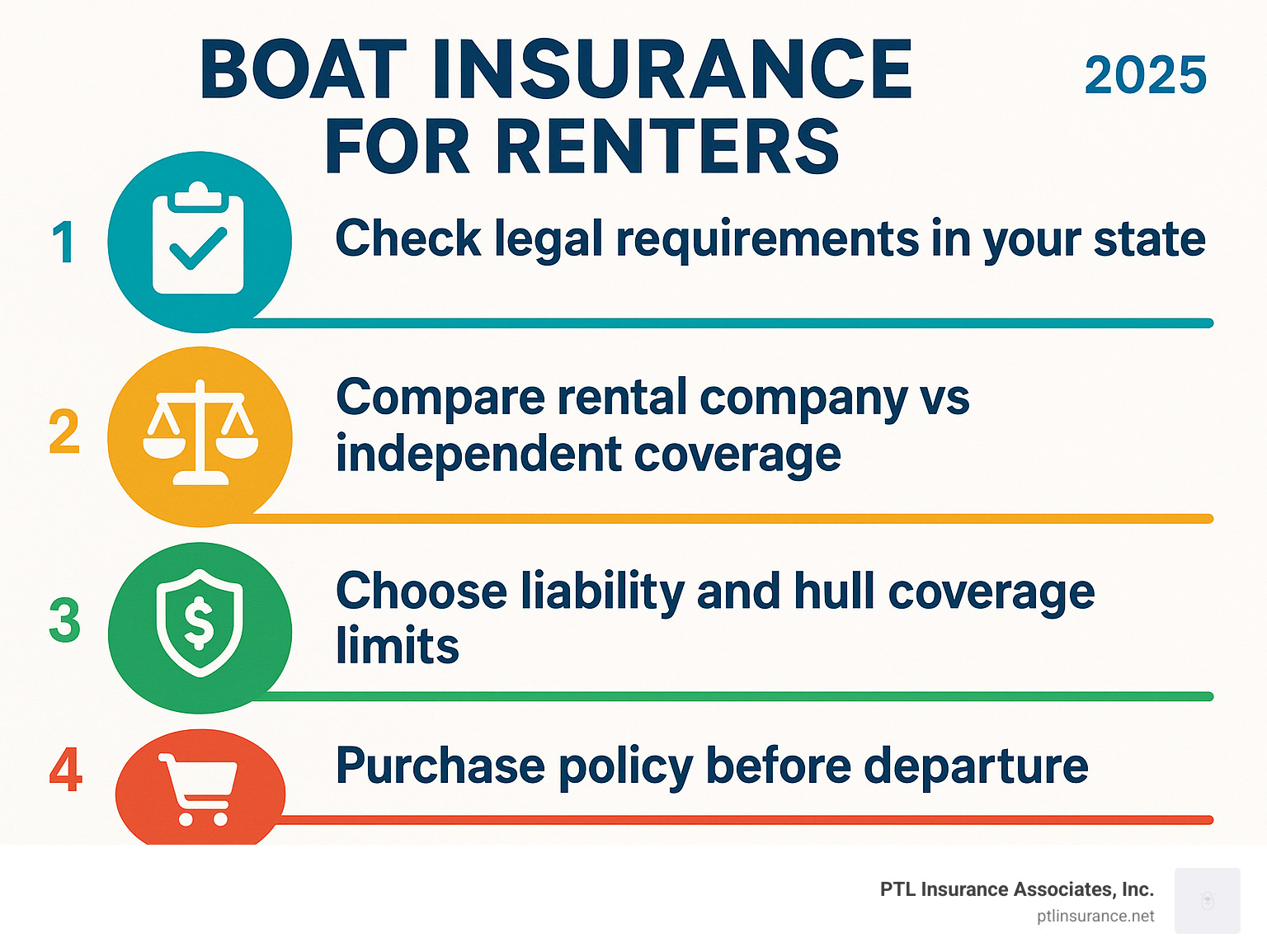
Why Boat Rental Insurance Matters
The boating world has changed dramatically. Here in South Florida, I see it every day – more families finding the joy of being on the water, peer-to-peer boat sharing platforms making rentals easier than ever, and weekend warriors heading out in record numbers.
But with all this excitement comes a sobering reality: collision statistics show that 55% of recreational boating accidents involve boats hitting other vessels or objects. These aren’t minor scrapes either. We’re talking about serious incidents that can turn your perfect day into a financial nightmare.
The numbers don’t lie. When the Coast Guard tallied up recreational boating accidents in 2020, they found $62.5 million in property damage. That’s not spread across thousands of incidents – it’s concentrated among far fewer accidents than you might think.
State lawmakers are taking notice too. Florida’s SB 606, passed in 2022, now requires proof of insurance for boat rentals. It’s part of a growing trend as states recognize that the old “hope for the best” approach isn’t working anymore.
The rise of peer-to-peer platforms has added another layer of complexity. When you rent someone’s personal boat through an app, the coverage situation gets murky fast.
Do I Need Insurance When I Rent a Boat?
The honest answer? It depends on where you’re boating and who you’re renting from – but smart boaters always lean toward “yes.”
Florida changed the game with SB 606. As of January 2023, you must show proof of insurance before renting any boat. No exceptions, no workarounds.
Arkansas and Utah require coverage for boats over 50 horsepower, which covers most rental boats you’ll encounter.
Every other state leaves it up to you legally, but here’s the catch: many marinas and rental companies won’t hand over the keys without seeing proof of coverage first.
Even when it’s not legally required, boat insurance for renters protects you from the kind of financial exposure that can follow you for years.
What Are the Risks of Going Uninsured?
Let me paint you a picture with real numbers. The Coast Guard documented $62.5 million in property damage from recreational boating accidents in just one year. Here’s what that looks like when it lands on your doorstep:
Property damage starts with routine hull repairs running $15,000 to $50,000. That’s for the “minor” stuff. Major collision damage can easily hit $200,000 or more.
Personal injury costs average $35,000 per claim, but that’s just the average. Medical helicopter evacuations run $25,000 to $100,000. Serious injury claims can reach hundreds of thousands.
Environmental liability might be the scariest exposure of all. A small fuel spill cleanup starts at $10,000 and climbs fast. Major environmental incidents can trigger fines up to $1,076,000 per incident.
One of our clients shared a story about his neighbor who borrowed a friend’s boat for a family outing. A simple navigation error led to a grounding that caused $30,000 in hull damage plus $15,000 in environmental cleanup costs. Without insurance, that single mistake cost more than most people make in a year.
Boat Insurance for Renters: What It Covers & What It Costs
Think of boat insurance for renters as your financial life jacket. Just like you wouldn’t venture onto the water without proper safety gear, you shouldn’t rent a boat without understanding what coverage protects you and what it costs.
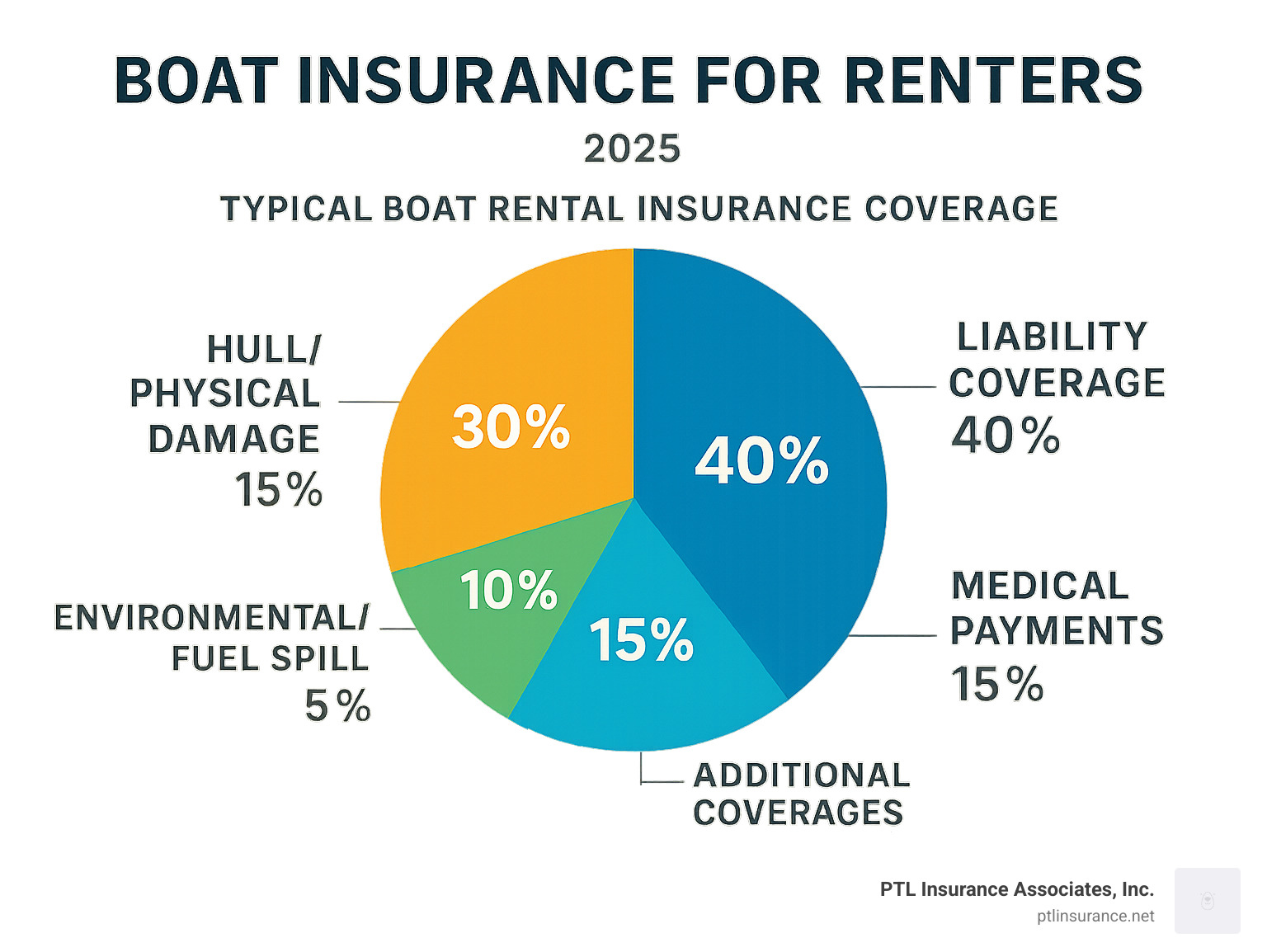
As this coverage breakdown shows, liability protection forms the largest piece of your insurance pie – and for good reason. According to the BoatUS 2020 Marine Insurance Claim Study, collision claims represent the most common and costly incidents for recreational boaters.
Types of Boat Insurance for Renters (Liability, Hull, Medical)
Liability coverage is your first line of defense and the most critical component of any boat insurance for renters policy. This protects your wallet when things go wrong and you’re found responsible for bodily injury to others or property damage to boats, docks, or waterfront property.
Most policies offer liability limits starting at $300,000, but we typically recommend at least $500,000 in coverage. The peace of mind that comes with $1,000,000 in liability coverage often costs just a few extra dollars.
Hull and physical damage coverage protects the boat you’re renting. This covers everything from collision damage when you misjudge a dock approach to comprehensive losses like theft, fire, or storm damage.
Medical payments coverage acts like a safety net for immediate medical expenses, regardless of who’s at fault. Most policies offer $5,000 to $25,000 per person in medical payments.
Don’t overlook uninsured boater coverage and pollution liability. Just like on the roads, not every boat owner carries insurance. Fuel spill coverage handles environmental cleanup costs that can reach astronomical amounts.
Exclusions Boat Insurance for Renters Won’t Touch
Every boat insurance for renters policy has boundaries, and knowing these limits prevents unpleasant surprises when you need coverage most.
Your policy won’t cover wear and tear or mechanical failures that result from poor maintenance. Racing or competitive activities void most policies immediately. Alcohol-related incidents completely void your insurance coverage. Weather-related exclusions can be tricky – operating in clearly dangerous conditions often voids coverage.
Cost Snapshot: Short-Term vs. Annual Policies
The cost of boat insurance for renters depends on several factors, but most people are pleasantly surprised by how affordable protection can be.
| Coverage Type | One-Day Policy | Annual Policy | Best For |
|---|---|---|---|
| Basic Liability | $25 – $50 | $300 – $500 | Occasional renters |
| Full Coverage | $40 – $75 | $500 – $700 | Regular renters |
| High-Value Boats | $75 – $150 | $700 – $2,000+ | Luxury rentals |
Short-term policies work perfectly for vacation rentals or occasional outings. Under $50 for a day’s worth of comprehensive protection is a small price to pay for peace of mind.
Annual policies make sense if you rent boats regularly. If you’re on the water more than 3-4 times per year, annual coverage typically costs less than multiple short-term policies.
Boat value and type significantly impact your premium. Your age and boating experience matter too – insurers offer better rates to experienced operators with clean records. Location plays a role as well. High-traffic areas like Biscayne Bay generally cost more to insure than quieter inland lakes.
How to Buy Boat Rental Coverage Step-by-Step
Getting boat insurance for renters doesn’t have to be complicated. With today’s technology, you can often get covered in minutes right from your phone. The key is knowing what you need before you start shopping.
Start by figuring out your coverage needs. If you’re renting in Florida, you’ll need proof of insurance before you can legally operate – that’s non-negotiable thanks to SB 606. Even in other states, think about what you could lose if something goes wrong.
Once you know what you need, you have several ways to buy coverage. Rental company insurance is convenient – just add it to your rental like buying insurance at the car rental counter. Mobile apps like Buoy make it incredibly easy to get quotes and purchase coverage instantly. Your existing insurance agent can also help, especially if you want someone to explain the details.
For quotes, apps like GEICO Marine offer competitive rates and quick processing. Just make sure you’re comparing apples to apples – a cheap policy with low limits might not be the bargain it appears to be.
When choosing policy limits, liability coverage protects your assets. If you own a home or have significant savings, consider higher limits. We typically recommend at least $500,000 in liability coverage, with $1 million being even better for most situations.
Peer-to-Peer vs. Commercial Rental Company Policies
The boat sharing economy has changed how we think about rental insurance. When you rent through traditional companies, they usually have fleet insurance that provides some basic protection.
Peer-to-peer platforms are trickier. The boat owner’s regular insurance policy typically doesn’t cover commercial rental activities. Some platforms have stepped up to fill this gap – they partner with specialized insurers to offer platform-provided coverage that meets legal requirements.
The challenge is that coverage quality varies dramatically between platforms. Some offer robust protection that rivals traditional policies, while others provide bare-minimum coverage that leaves you exposed.
One advantage of supplemental liability coverage is that you control the policy terms. Instead of hoping the platform’s coverage is adequate, you can choose limits and deductibles that make sense for your situation.
Does Your Home, Boat, or Umbrella Policy Already Cover You?
This question comes up constantly, and the answer is usually “sort of, but not really.” Your homeowners liability coverage might extend to small rental boats under certain circumstances, but don’t count on it for serious protection.
Most homeowners policies have strict limits on watercraft coverage – typically boats under 26 feet with engines under 50 horsepower. Even then, you’re looking at minimal coverage that won’t protect you in a major accident.
If you own a boat, your personal boat policy extension might provide some liability coverage when renting other vessels. However, it definitely won’t cover hull damage to the rental boat.
Umbrella policies can provide additional liability protection, but they only kick in after your underlying coverage is exhausted. Plus, they typically have the same watercraft exclusions as your homeowners policy.
The bottom line? Existing coverage might provide a small safety net, but it’s not a substitute for proper boat insurance for renters.
Information You’ll Need for a Quick Quote
Getting a quote is straightforward when you have the right information ready. You’ll need vessel specs including the boat type, length, horsepower, and estimated value. Most rental companies can provide these details.
Your trip dates and duration matter because insurers price coverage based on exposure time. Waters you’ll steer affect pricing too. Busy areas like Miami’s Biscayne Bay typically cost more to insure than quiet inland lakes.
Your operator experience plays a big role in pricing. Insurers want to know your age, years of boating experience, and whether you have any safety course certifications.
Be honest about your experience level. Trying to inflate your qualifications might save a few dollars on premium, but it could void your coverage if you need to file a claim.
Optional Add-Ons Worth Considering
Beyond basic coverage, several optional add-ons can improve your protection. Personal effects coverage protects your belongings on the boat. Watersports liability is essential if you plan to tow skiers, wake boarders, or tubers. Trip cancellation coverage can reimburse prepaid rental costs if weather, illness, or mechanical problems force you to cancel.
The key is balancing cost with protection. Every add-on increases your premium, but the right combination can provide comprehensive coverage that lets you truly relax and enjoy your time on the water.
For more detailed information about boat insurance requirements, check out Do You Need Boat Insurance? on our website.
Before, During & After Your Trip: Best Practices & Claims
Having boat insurance for renters is just the first step. Protecting yourself requires preparation and smart practices throughout your rental experience.

I can’t tell you how many times I’ve seen renters skip the pre-trip inspection, only to face disputes later about who caused that mysterious hull scratch. Your smartphone is your best friend here – use it liberally to document everything before you cast off.
Pre-Rental Checklist to Protect Yourself
Think of this 15-minute routine as your insurance policy’s best friend. The NMMA Steering Wheel Checklist provides a thorough framework, but here’s what really matters for protecting yourself.
Start with photos and video of the entire boat. Walk around the hull and capture every existing scratch, dent, or scuff mark. I recommend taking a continuous video tour while narrating what you see – “Here’s a scratch on the port side near the bow, looks like it’s been there a while.” This creates a timestamp and your voice describing pre-existing damage.
Safety equipment verification isn’t just about compliance – it’s about survival. Count the life jackets and make sure they’re the right sizes for your group. Check that the fire extinguisher hasn’t expired. Look for the horn, flares, and navigation lights if you’ll be out after sunset.
Weather and water conditions deserve serious attention, especially here in South Florida where afternoon thunderstorms can pop up quickly. Check the marine forecast, understand any navigation limits on your policy, and make sure you have emergency contact numbers programmed into your phone.
Filing a Claim If Something Goes Wrong
Nobody plans for accidents, but when they happen, your response in the first few minutes can make or break your claim experience.
Get everyone safe first – this might seem obvious, but adrenaline can cloud judgment. Once everyone’s secure, start thinking about documentation. If the incident involves another boat or injury, call the Coast Guard or marine police immediately.
Document everything while it’s fresh in your mind. Take photos from multiple angles showing all damage. Get pictures of the other boat if there’s a collision. Write down exactly what happened – the sequence of events, weather conditions, who was driving, and what caused the incident.
Contact your insurance company’s claims hotline as soon as possible. Most insurers have 24/7 claim reporting, and many prefer immediate notification rather than waiting until you’re back on land.
Here’s what not to do: don’t admit fault or discuss who’s responsible for the accident. Don’t agree to pay for damages on the spot, even if you think you caused them.
Factors That Influence Your Premium & How to Lower It
Understanding what drives your boat insurance for renters premium helps you make smarter choices and potentially save money. Age and experience matter significantly – insurers view boating like driving, where older, more experienced operators represent lower risk.
Your boating education pays dividends beyond just safety knowledge. Most insurers offer discounts of 5-10% for completing recognized boating safety courses.
Your driving record influences boat insurance premiums too. Insurers figure that responsible drivers tend to be responsible boaters.
Deductible choice offers the biggest immediate savings opportunity. Choosing a $1,000 deductible instead of $500 might save you 15-20% on premiums.
Booking coverage in advance rather than last-minute often results in better rates. Annual policies make sense if you rent boats more than three or four times per year.
Frequently Asked Questions about Boat Insurance for Renters
After helping Miami boaters for over three decades, we’ve heard just about every question imaginable about boat insurance for renters. Here are the ones that come up most often, along with the straight answers you need.
Is coverage legally required in every state?
Here’s the short answer: no, but that doesn’t mean you should skip it. Only three states currently require boat insurance for renters by law.
Florida leads the pack with SB 606, which took effect in January 2023. If you’re renting a boat in the Sunshine State, you must show proof of insurance before leaving the dock. No exceptions.
Arkansas and Utah both require coverage, but only for boats over 50 horsepower. Utah adds an extra wrinkle – certain facilities can mandate insurance regardless of engine size.
The other 47 states don’t legally require coverage, but here’s the catch: many marinas and rental companies won’t hand you the keys without proof of insurance anyway. They’ve seen too many expensive accidents to take chances with uninsured renters.
Even in states without legal requirements, smart boaters protect themselves. One accident can cost more than most people make in a year, and that’s a risk few can afford to take.
Will my homeowners policy pay if I hit another boat?
This question makes me cringe a little, because the answer is “maybe, but probably not enough.” Your homeowners policy might provide some liability coverage for small boats – typically those under 26 feet with engines under 50 horsepower. But there are several problems with relying on this coverage.
First, the coverage limits are usually pretty modest. We’re talking about accidents that can easily cost $50,000 or more, and your homeowners policy might only provide $100,000 in total liability coverage. That sounds like a lot until you’re facing a serious injury claim.
Second, many homeowners policies specifically exclude rental activities. Insurance companies don’t love covering boats you don’t own, especially when you’re not familiar with how they handle.
Third – and this is important – your homeowners policy won’t cover damage to the rental boat itself. If you put a $30,000 hole in the hull, that’s coming out of your pocket.
Finally, filing a boat claim on your homeowners policy could affect your rates or even your coverage renewal. Is saving $50 on boat insurance for renters worth risking your homeowners insurance? We don’t think so.
Can I buy insurance right at the dock?
Technically, yes – some companies offer last-minute coverage through mobile apps. But buying insurance at the dock is like buying sunscreen after you’re already sunburned. It’s better than nothing, but you’re not getting the best protection.
When you wait until the last minute, you’re stuck with whatever coverage is immediately available. You won’t have time to compare options, read policy terms, or understand what’s excluded. You’ll pay higher premiums for the convenience, and you might end up with coverage that doesn’t actually protect you when you need it most.
The bigger problem is that some incidents happen before you even leave the dock. What if you back into another boat while leaving the slip? If you haven’t purchased coverage yet, you’re on your own.
We always recommend buying boat insurance for renters at least 24 hours before your trip. This gives you time to review the policy, understand your coverage, and make sure you’re properly protected. It also usually costs less than last-minute coverage.
If you’re planning a boat rental, add insurance to your pre-trip checklist right alongside checking the weather and packing sunscreen. Your wallet will thank you later.
Conclusion & Get Covered Before You Cast Off
When you’re planning that perfect day on the water, boat insurance for renters might not be the most exciting part of your prep work – but it’s definitely one of the smartest investments you can make. Think of it as your financial life jacket.
The numbers tell a clear story. With collision claims making up 26% of all boat insurance incidents and repair bills averaging $15,000 to $50,000, that peaceful cruise can quickly turn into a financial storm. One moment of distraction, one unexpected wave, or one mechanical failure can cost more than most people make in months.
Here in South Florida, we see it all the time. Miami’s waterways are busier than ever, and with that comes increased risk. Whether you’re navigating the crowded channels of Biscayne Bay or exploring the backcountry of the Keys, having proper coverage means you can focus on making memories instead of worrying about what-if scenarios.
At PTL Insurance Associates, we’ve spent over 35 years helping our neighbors make smart insurance decisions. We know the unique challenges of boating in South Florida – from afternoon thunderstorms that pop up out of nowhere to the maze of channels and sandbars that can catch even experienced boaters off guard.
What sets us apart is our personalized approach to finding the right coverage. We’re not here to sell you the most expensive policy or push coverage you don’t need. As an independent agency, we work for you, not the insurance companies. We take time to understand your boating plans, your budget, and your comfort level with risk.
The best part about boat insurance for renters? It’s surprisingly affordable when you consider what you’re protecting against. For less than the cost of dinner for two at a nice restaurant, you can have coverage that protects you from potentially devastating financial exposure.
Don’t let a perfect day on the water become a financial nightmare that follows you for years. The peace of mind that comes with proper coverage is worth every penny.
Ready to get protected? Check out our Boat Insurance Quotes page to get started, or give us a call to talk through your specific needs. We’re here to make the process as smooth as possible, so you can get back to planning the fun parts of your trip.
The water will always be there waiting for you. But the right boat insurance for renters should be in place before you untie those dock lines. Safe boating starts with smart planning – and that includes protecting yourself financially before you cast off.

